



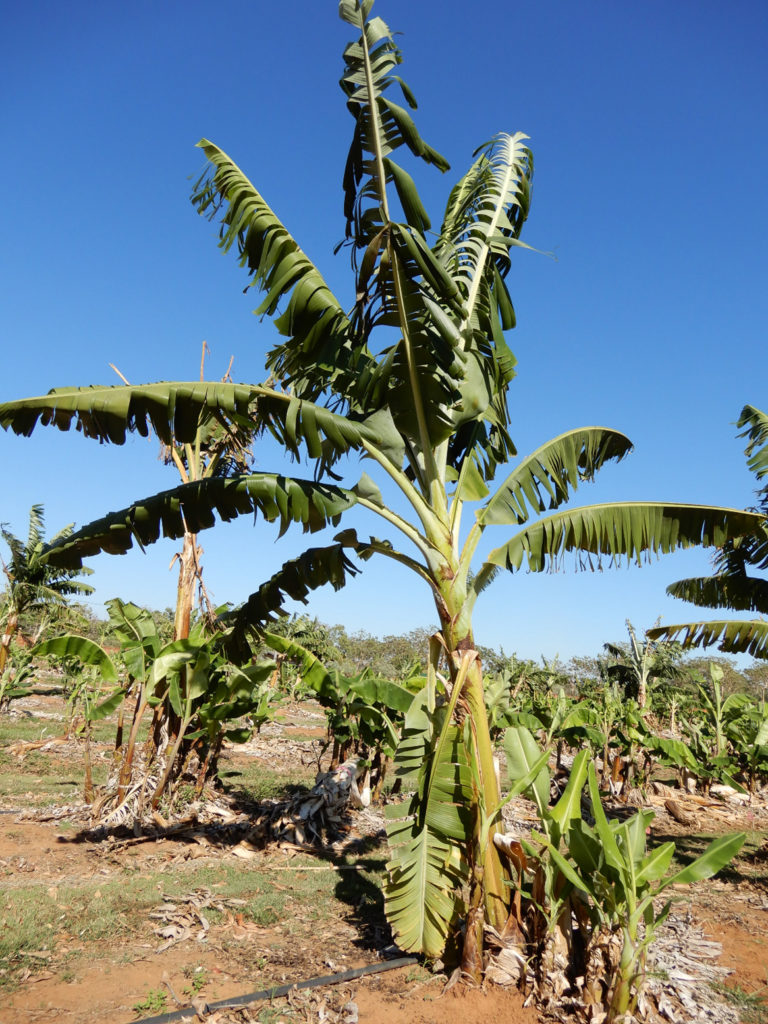
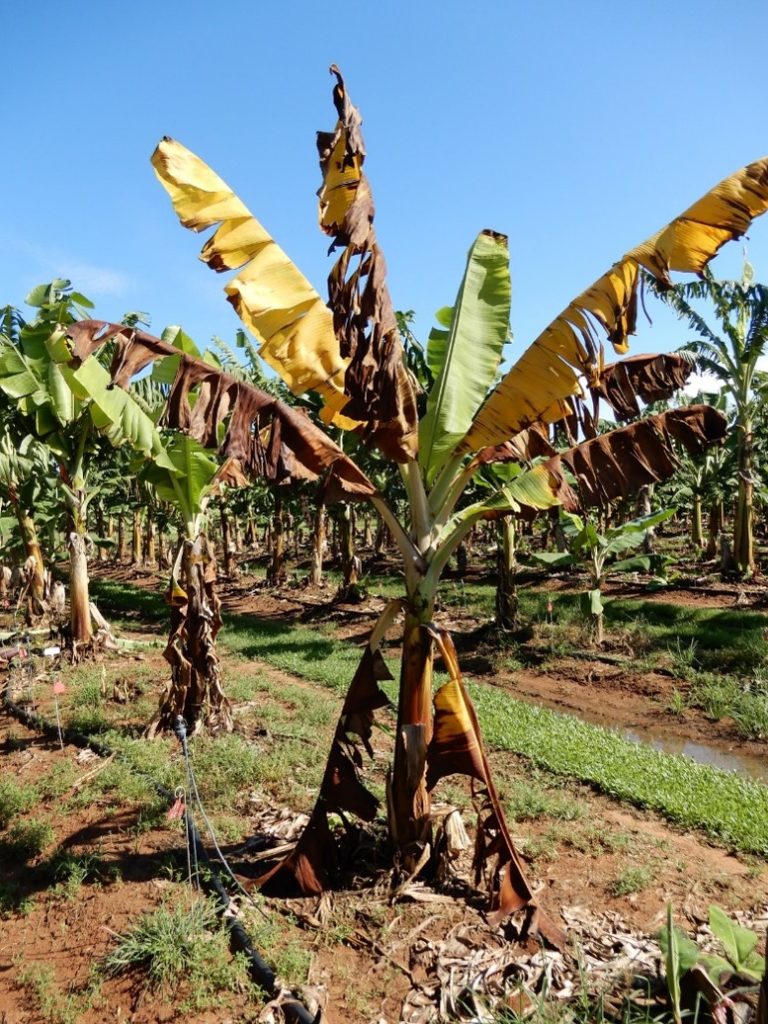




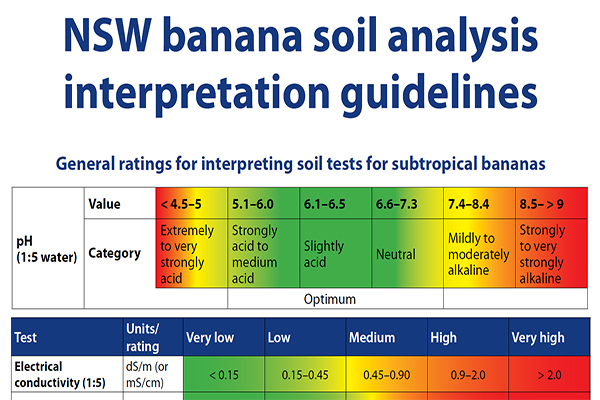



 In order to maximise banana productivity and yield, whilst increasing resilience to pests and diseases, it is necessary to get plant nutrition right. Soil and tissue analyses are vital for monitoring soil fertility and plant nutrition. Regularly testing soil and tissue nutrients, and tracking changes in nutrient over time, is essential for developing an accurate and appropriate fertiliser program that delivers the nutrients needed at the right time and can result in efficient and sustainable fertiliser use. It also allows soil fertility issues to be identified early and provides an opportunity to correct them before they begin to affect productivity. It is not possible to achieve this without correctly interpreting the information gained from soil and tissue nutrient analyses. However, the results reported from soil and tissue analyses can often be confusing and include irrelevant information, making their interpretation challenging. The NSW soil and leaf analysis interpretation guidelines for bananas has been developed to assist with the interpretation of soil and tissue tests so you can make sure your bananas are getting the nutrient they need.