News

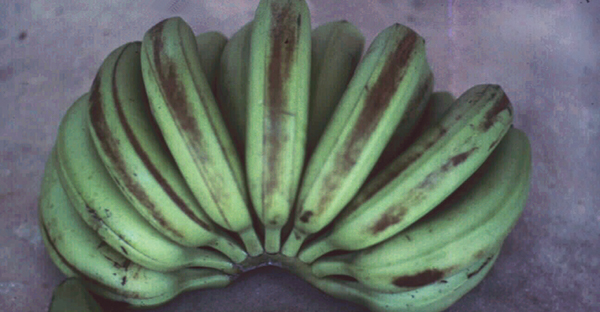
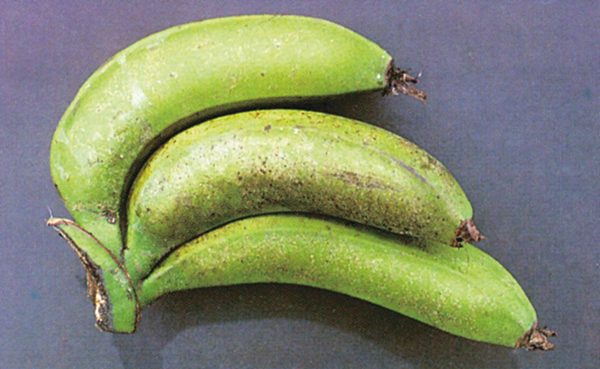
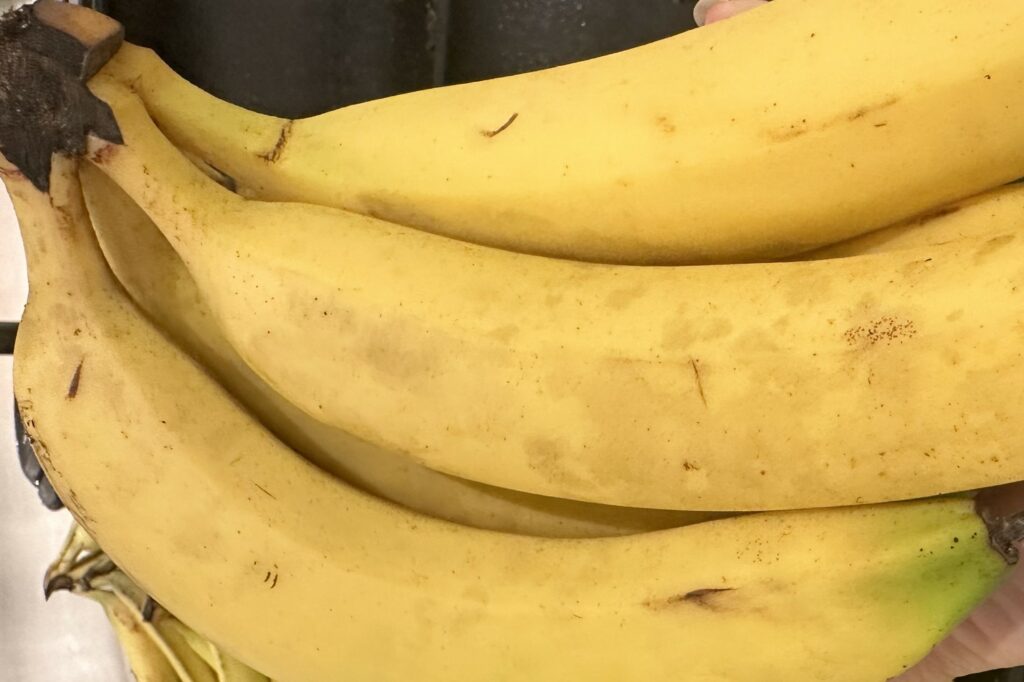
Spots of fruit

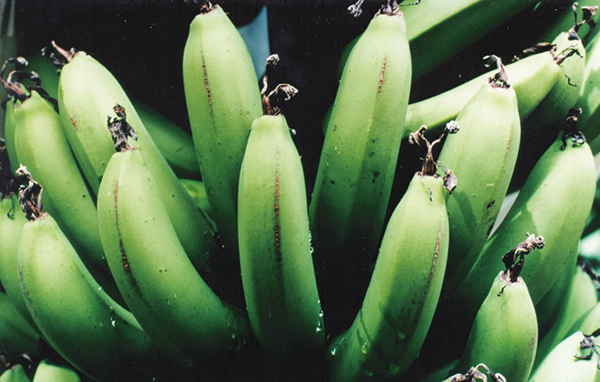
Spots on fruit

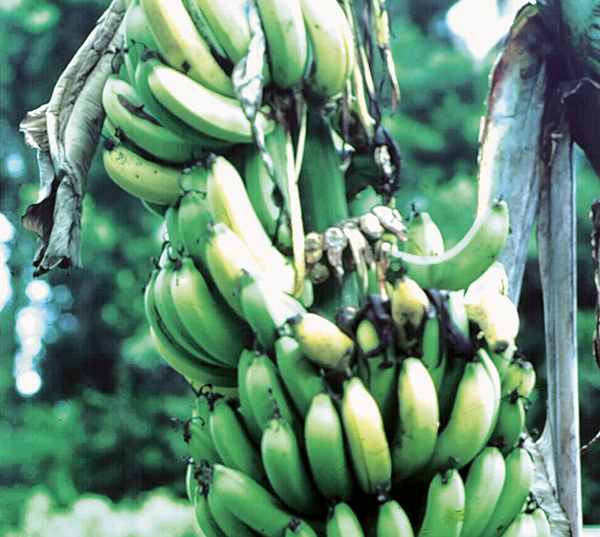
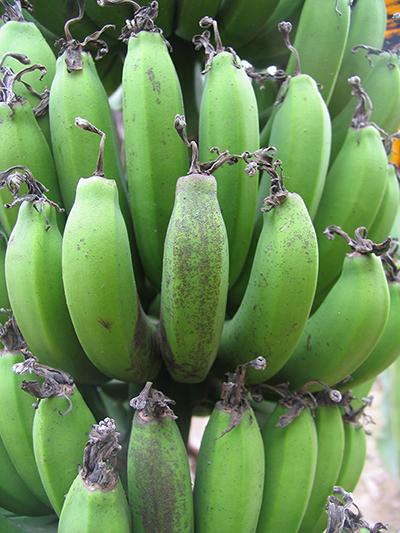
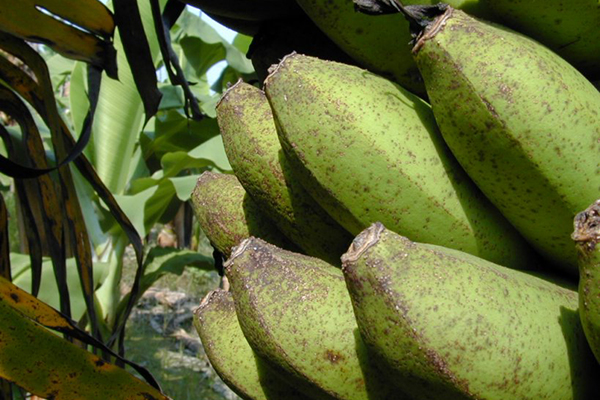
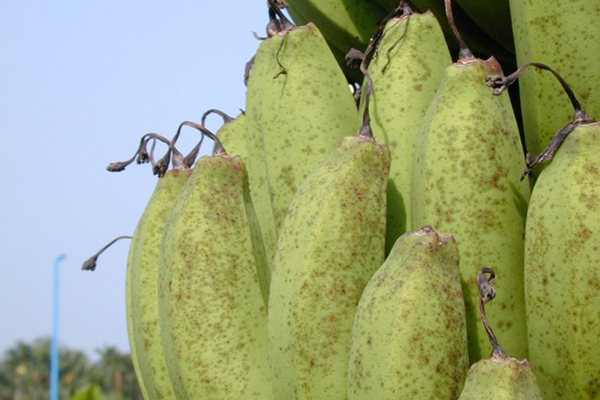
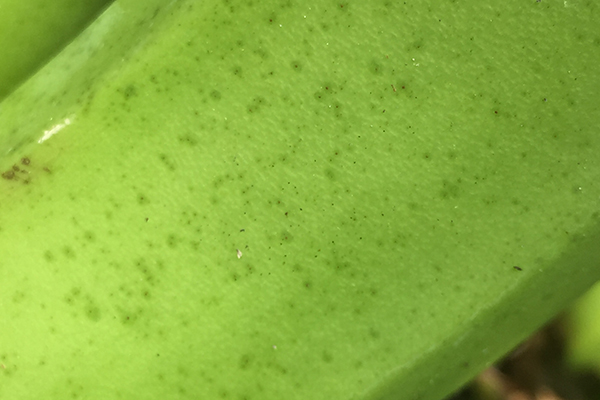
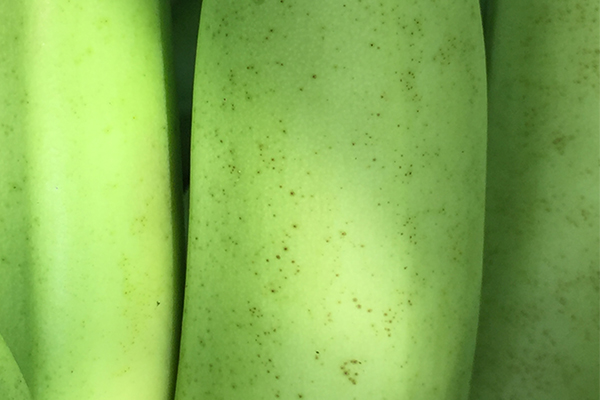
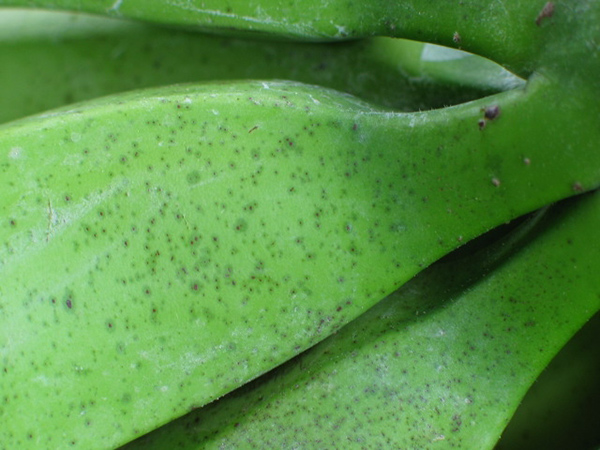
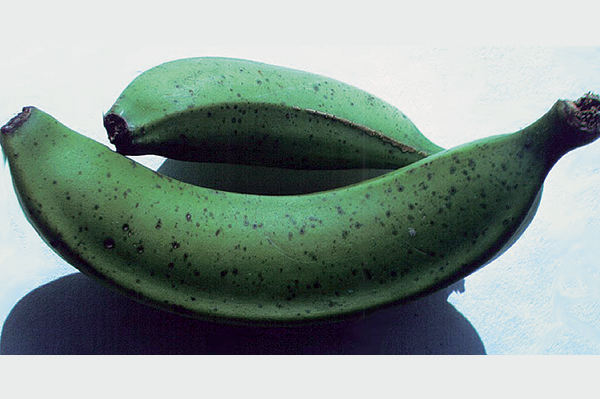
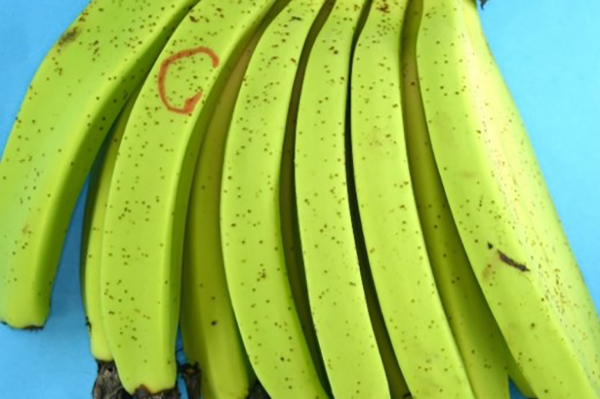
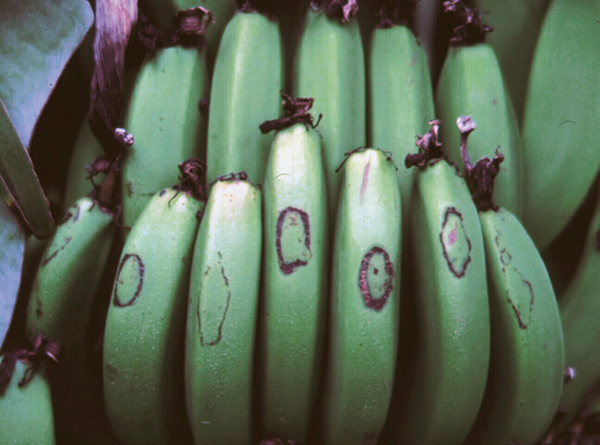
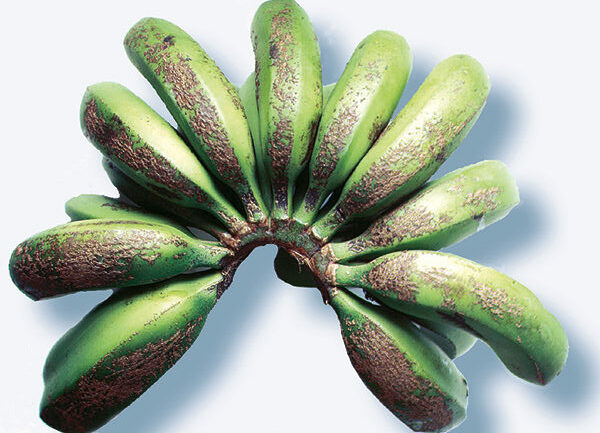
Banana freckle

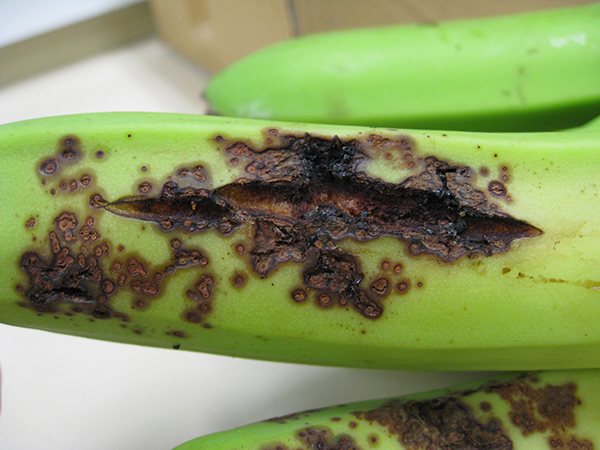
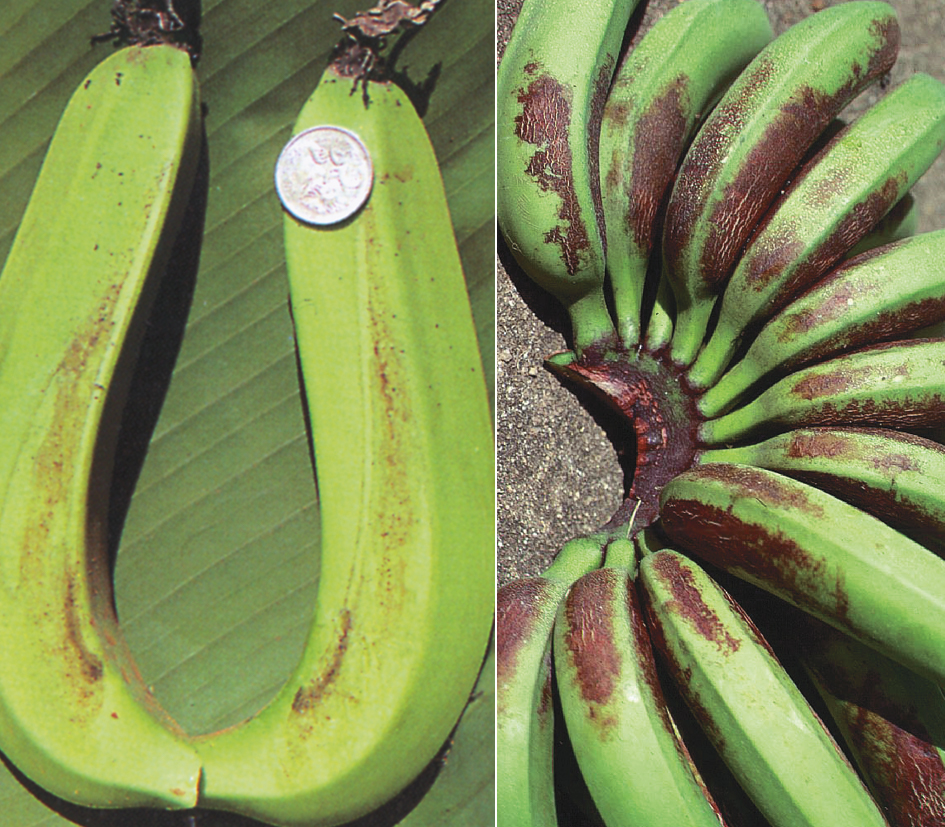
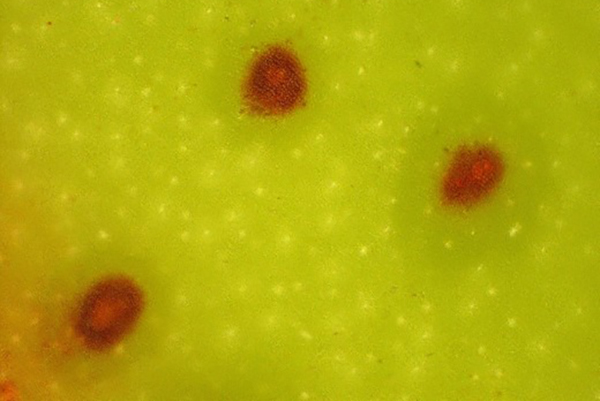
Symptoms of banana freckle on fruit of a cultivar in the Cavendish subgroup © Department of Primary Industries

Biosecurity Alert

Cause: Banana freckle is a leaf and fruit spotting disease of banana and is caused by several species of the fungus Phyllosticta, some of which are exotic to Australia. The disease that affects Cavendish bananas is caused by the race Phyllosticta cavendishii, with the first incursion detected in Australia’s Northern Territory in 2013. This race can also affect non-Cavendish varieties.

Symptoms: The most distinguishing symptom of the disease are dark raised spots, and a sandpaper feel to infected (spotted) leaves and fruit. On fruit, individual spots first appear as minute, reddish-brown flecks surrounded by a halo of dark-green, water-soaked tissue.

Biosecurity: Both commercial and backyard banana growers should regularly monitor their banana plants for symptoms of the disease. If you see symptoms or anything unusual call Biosecurity Queensland on 13 25 23 or the Exotic Plant Pest Hotline on 1800 084 881 immediately.

Movement restrictions are in place to stop the movement of plants, plant material and fruit from infected or suspect premises. Further, Queensland, New South Wales and Western Australia prohibit the entry of banana fruit and plant material from the Northern Territory, with quarantine checkpoints at some state borders.

More info:

Plant Health Australia
Queensland Government
Northern Territory Government
Australian Government
ABGC
Symptoms of banana freckle on banana leaves (better bananas)

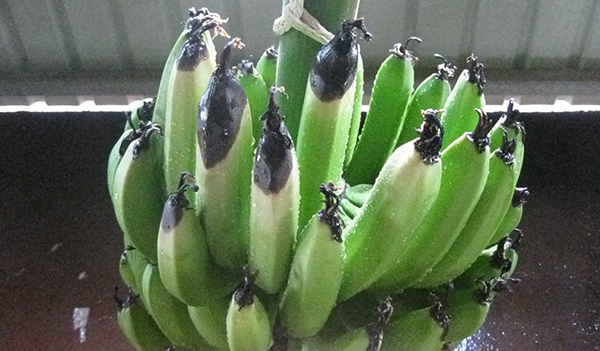
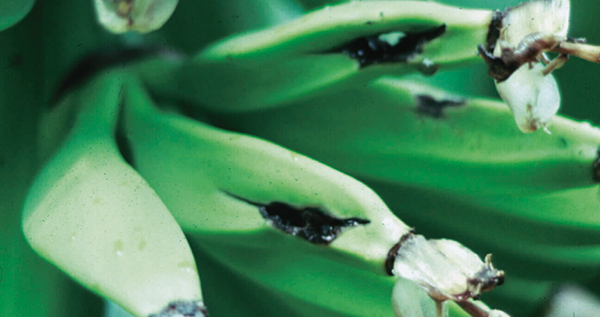
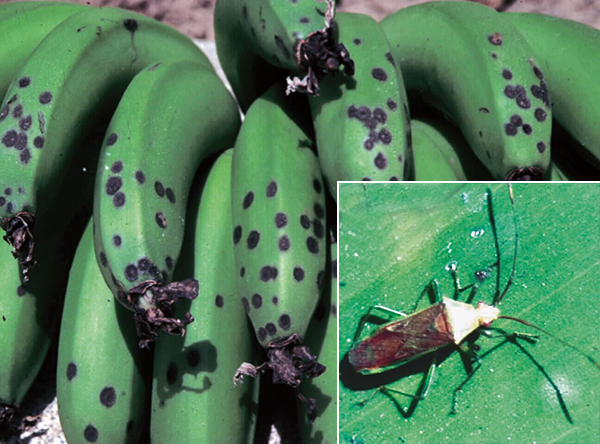
Banana spotting bug

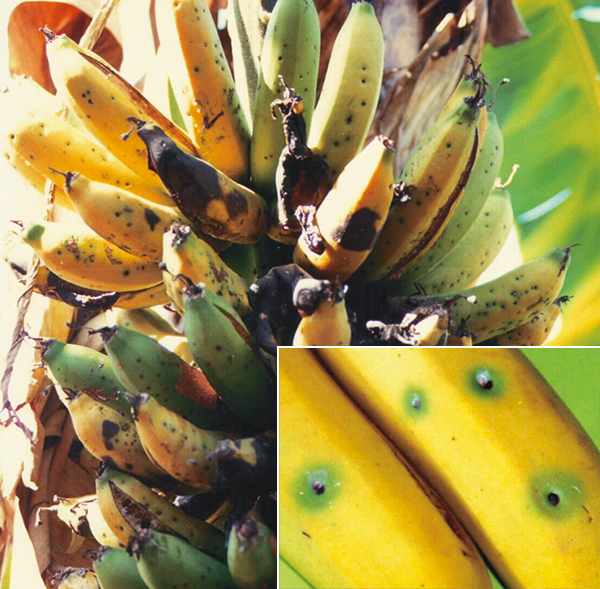
Note slightly sunken black circular spots up to 5 mm in diameter. Inset: banana spotting bug (about 2 cm long) © Department of Primary Industries

Cause: Feeding (sucking) by banana spotting bug, Amblypelta lutescens lutescens, usually on the exposed outer curve of the fingers.

Solution: Damage is more severe on blocks adjacent to rainforest. No specific treatments required. If more than 5% of bunches are affected, spot spray.   

Fruit speckle

Cause: Caused by multiple species of fungi including Colletotrichum musaeFusarium oxysporum and Fusarium semitectum. Spores are produced in large numbers on dead leaf material during wet conditions and are spread in air currents to the fruit.  

Solution: Fruit speckle is generally a minor disease that can become problematic in seasonally unfavourable weather conditions. Under normal conditions, a fungicide leaf spot spray program should assist and keep levels low.

More info:

Deightoniella spot

Cause: The fungus Deightoniella torulosa. Spores are produced in large numbers on dead leaf material during wet conditions and are spread in air currents to the fruit. Spots are typically larger than fruit speckle (2-4mm) and sunken on green fruit. 

Solution: Deightoniella is generally a minor disease in well managed plantations that use a full leap spot control program. 
More info:
A guide to identifying fungal fruit diseases

Fruit flies

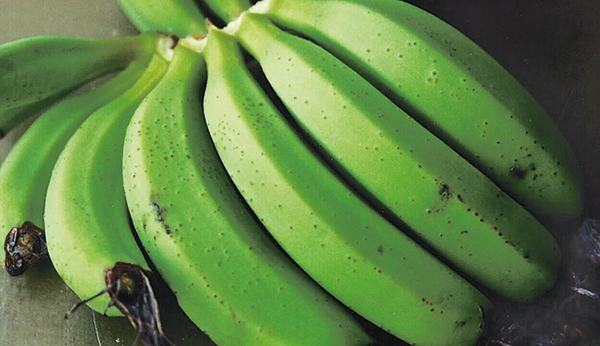
Note stings (minute pinholes) on the surface. A small drop of sap usually forms at the sting site © Department of Primary Industries

Cause: Banana fruit fly, Bactrocera musae, and Queensland fruit fly, Bactrocera tryoni, laying eggs (stinging) in the pulp of banana just below the skin. The banana fruit fly can sting green fruit but the Queensland fruit fly only stings ripening or yellow fruit. 

Solution: Chemical control should not be required since fruit is harvested at the hard green stage before either of the fruit flies can complete their life cycles. Do not leave over ripe fruit in the field. If mixed ripe fruit causes hot spots in the plantation, spot spray with an appropriate chemical. 
Flower thrips

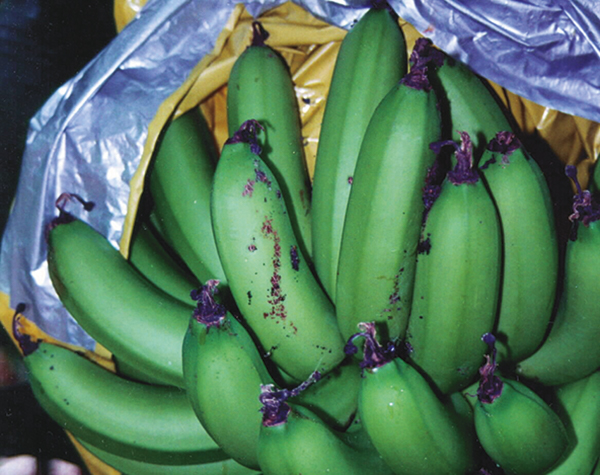
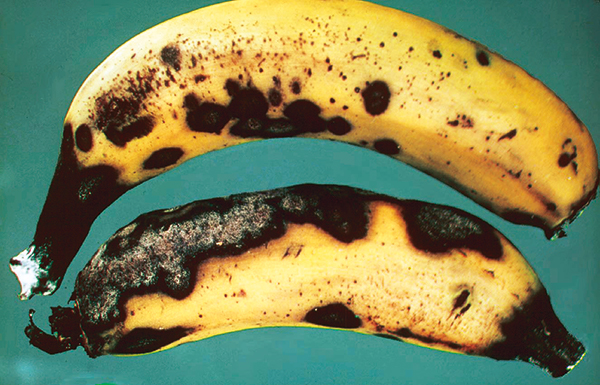
Flower thrips oviposition present as raised 'pimples' on the skin of banana fruit © Department of Primary Industries

Cause: Scarring from egg-laying by flower thrips, Thrips hawaiiensis on young fruit when still covered by the bracts.

Solution: Insecticide injection at bell emergence for control of scab moth also controls flower thrips. 

More info:
Banana flower thrips – general information 

Spray burn

The spots or rings are usually on the lowest points of fingers where chemical runs if the bunch is over sprayed © Department of Primary Industries

Cause: Spraying with excessive volumes of chemical or inappropriate chemical use. 

Solution: Use only registered chemicals and apply according to the label directions.

Sooty blotch

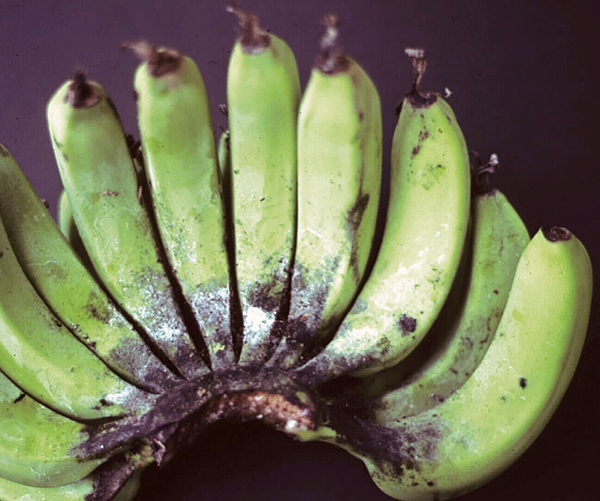
Cause: Multiple fungal organisms are associated with the symptoms. Causes superficial damage to the banana peel and typical symptoms are charcoal-like smudges that are dark and irregular in shape. 

Solution: Lady Finger and Ducasse are more prone to sooty blotch than Cavendish-type bananas. A post-harvest dip of sodium hypochlorite at 100 ppm for 5 minutes followed by immediate rinsing, is highly effective in removing sooty blotch.

More info:

Sooty mould

Sooty mould symptoms © Department of Primary Industries

Cause: Sooty mould fungi that develop on the honeydew secretions of the banana aphid, Pentalonia nigronervosa.

Solution: Natural control by parasites and predators provides adequate suppression. Infestations are more obvious during cooler weather in autumn and spring. Spot treatment with a suitable pesticide is occasionally required as the mould can be difficult to remove from fruit.

More info:

Scabs on fruit

Scabs on fruit

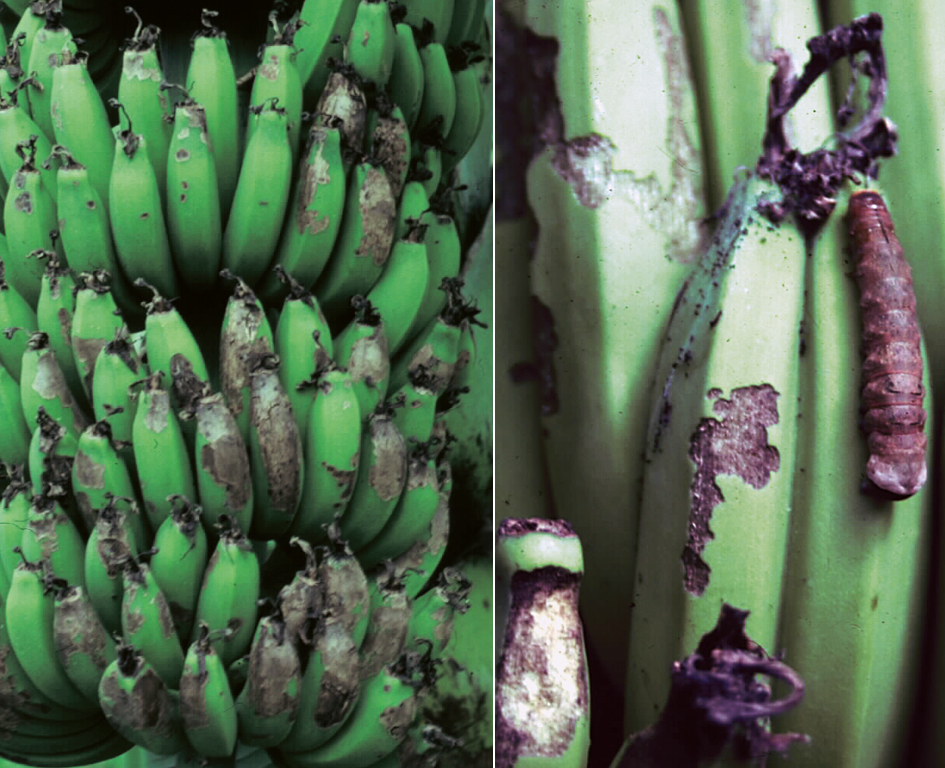
Banana fruit caterpillar

© Department of Primary Industries

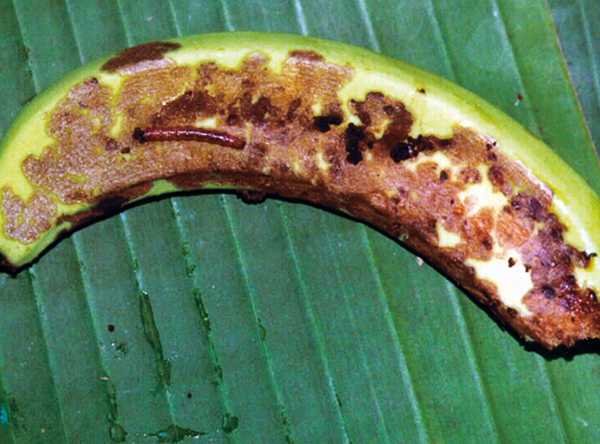
Cause:  Larvae of Tiracola plagiata feeding on leaves and fruit. Damage is usually confined to a few bunches and feeding on fruit is confined to the outside of fingers.

Solution: Although attack to a single bunch can be very severe, only a few bunches are damaged and specific treatments are not usually needed. Standard treatments for rust thrips and sugarcane bud moth help to control fruit caterpillar.  If damage is noted on more than 5% of bunches, treat with a pesticide. 

Corky scab

© Department of Primary Industries

Cause:  Scarring from feeding and egg-laying by flower thrips, Thrips hawaiiensis on young fruit when still covered by the bracts.

Solution: Insecticide injection at bell emergence for control of scab moth also controls flower thrips.

More info:

Banana flower thrips – Summary

Rub

© Department of Primary Industries

Cause:  Rubbing between the bag and young fingers due to prolonged strong winds. Leaves rubbing against the fruit cause similar symptoms.

Solution: Retaining existing vegetation or planting specific windbreak trees can reduce the damage caused by strong winds. 

Scab moth

Surface feeding by the larvae causes scarring © Department of Primary Industries

Cause: Larvae of Nacoleia octasema feeding on the fruit between the bunch stalk and the hand. Only occurs from bunch emergence to bract fall.
Solution: Newly emerged bells require pesticide injection while they are still upright. When the plants are growing quickly during summer, treat blocks at least weekly. 
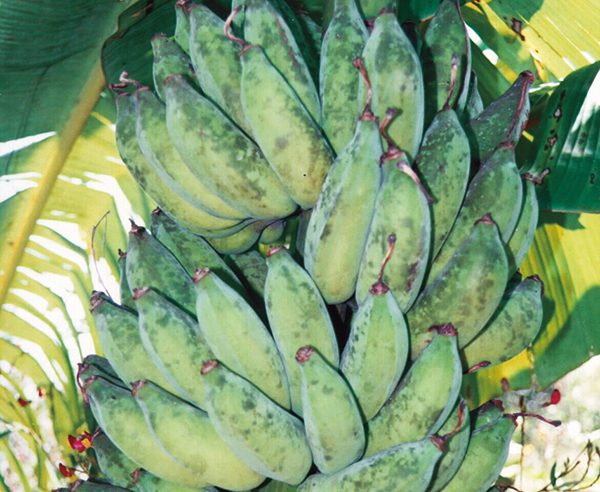
More info:

Banana scab moth – summary

Sugarcane bud moth

Surface feeding by the larvae causes scarring © Department of Primary Industries

Cause:  Small grey larvae of Opogona glycyphaga. They feed and pupate mainly towards the tips of the fingers and where the flower end of a lower finger meets a finger in the hand above.

Solution: This pest lays its eggs on fruit after all the bracts have fallen. Treat bunches with insecticide during bunch covering. 

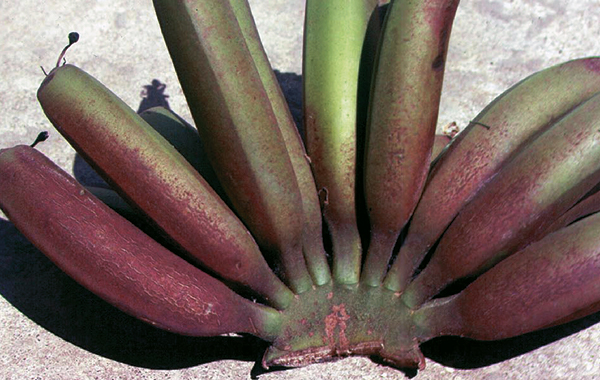
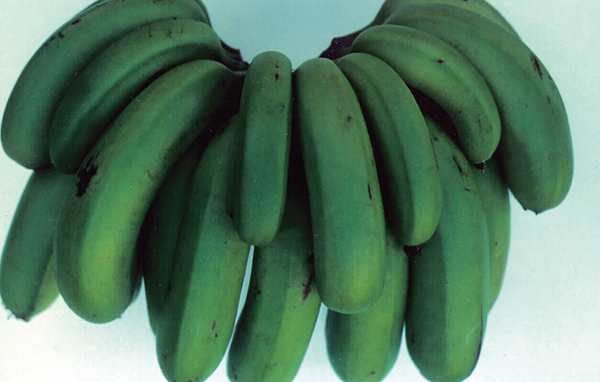
Deformed or variegated fruit

Deformed or variegated fruit

Mokillo

© Department of Primary Industries

Cause:  The disease is caused by multiple bacterium complexes.  This includes Pseudomonas sp. and two bacteria from the Enterobacteraceae family; Pantoea agglomerans and Enterobacter cowanii, that have been frequently recovered from infected fruits. The bacteria occur naturally on flowers and may be transferred to other flowers by insects. Frequently only one finger per hand is infected. The problem is more prevalent in the wet season. 

Solution: Control is not warranted.

More images

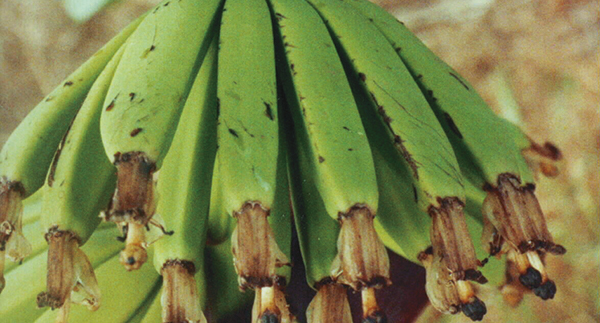
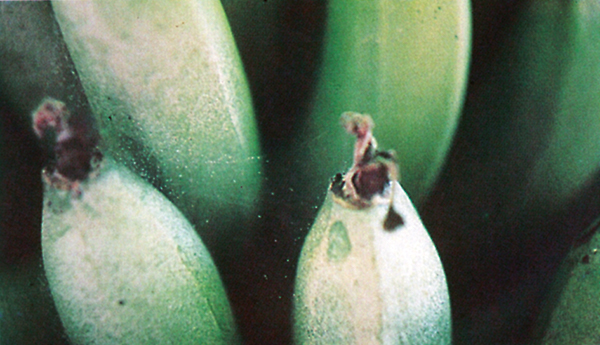
Nectaries (black spot inside banana tips)

© Department of Primary Industries

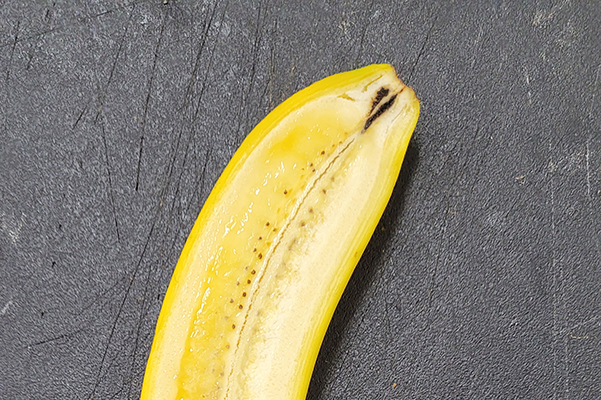
Cause: Oxidation of the anatomical structure of the fruit (nectary).

Solution: Control is not warranted.

More info:

Better Bananas article on nectaries

Tissue-cultured off-type

© Department of Primary Industries

Cause: A genetic abnormality occurring in tissue-cultured plants.

Solution: Destroy affected plants and set additional following suckers on nearby plants.

Cold weather

Fruit are usually short, straight and darker green © Department of Primary Industries

Cause: Temperatures below 6°C lead to abnormal growth. The more hours of exposure and the lower the temperature, the greater the damage.

Solution: Very early bunch covering before bract lifting will raise the bunch temperature by 1 to 2°C.

November dumps

© Department of Primary Industries

Cause: Bunch initiation coinciding with night temperatures below 6°C in winter. These bunches normally emerge in October and November. 

Solution: Seldom a problem in north Queensland. Plant crops are affected more than ratoons, so time planting to avoid bunch initiation during mid-winter.

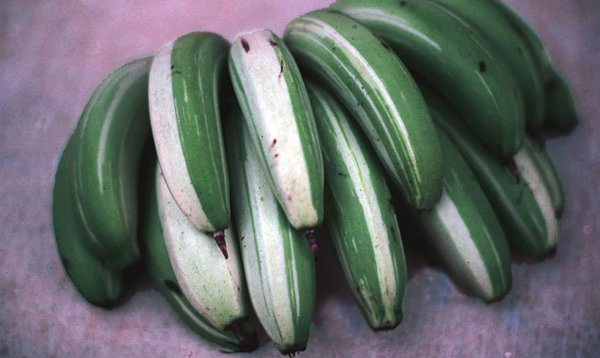
Genetic abnormality (variegated fruit)

© Department of Primary Industries

Cause: A genetic abnormality that occurs in tissue-cultured plants. 

Solution: Destroy affected plants and set additional following suckers on nearby plants.

Resistance to current post-harvest chemical trials

Resistance to current post-harvest chemical trials

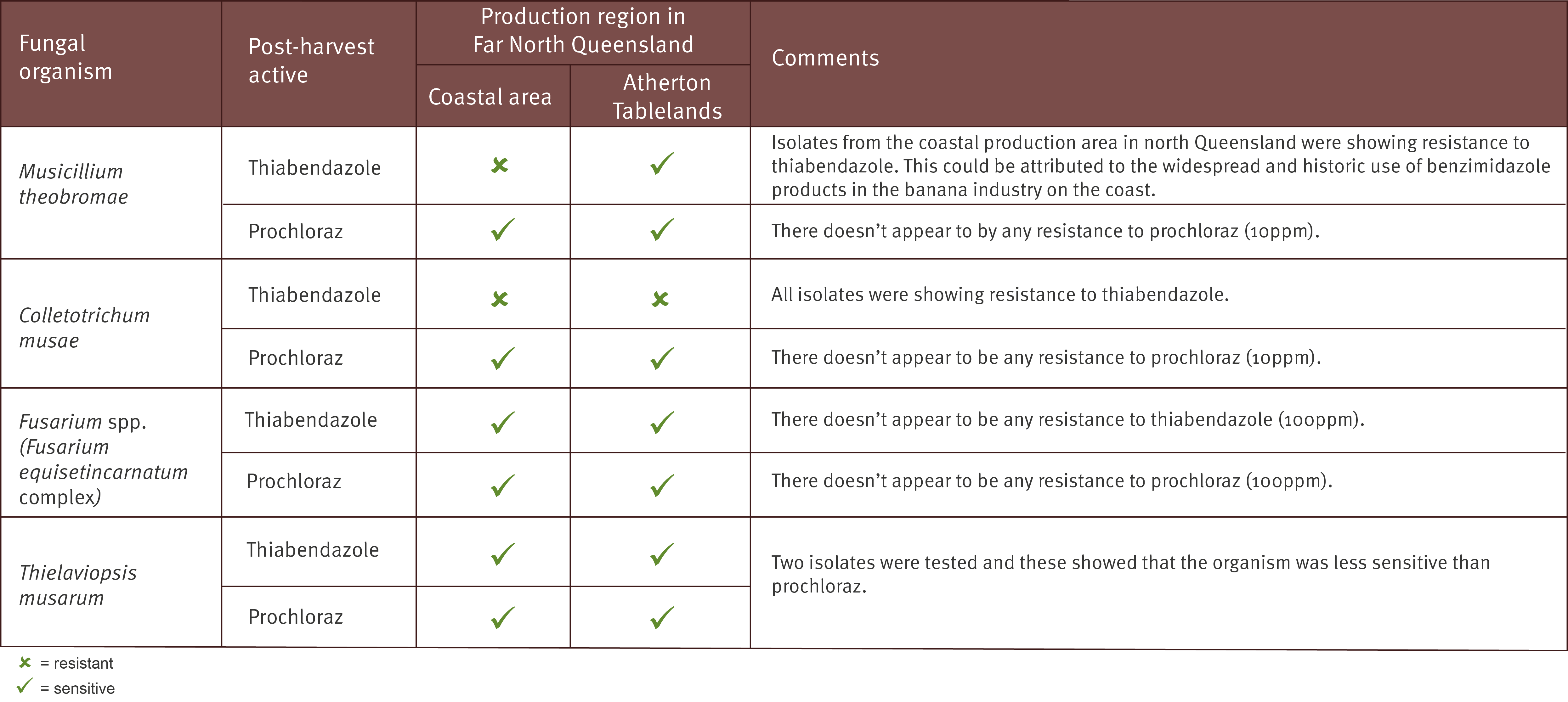
Lab testing used to indicate whether a fungal organism has developed resistance to a particular post-harvest fungicide is commonly termed ‘sensitivity testing’. Sensitivity testing has been carried out on the two registered post-harvest products (prochloraz – Protak® and thiabendazole – Tecto®), against each of the four fungi known to be responsible for causing crown end rot (Fusarium spp., Colletotrichum musae, Musicillium theobromae and Thielaviopsis musarum, commonly known as Chalara). 

The fungal organisms listed above were collected from both Cavendish and Lady Finger fruit and from different growing regions including the coastal production area of Far North Queensland, the Atherton Tablelands and northern New South Wales.  Where possible the fungi were also sourced from fruit that had not been exposed to commercial management practices (backyard production) in order to provide a suitable comparison.

These results show that it may be necessary to change your post-harvest treatment products, depending on the organism/s you are having issues with and the location of your farm.

If you would like more information on this trial contact the better bananas team at betterbananas@daf.qld.gov.au or 13 25 23.
This work is funded as part of the Cause and management of crown rot of banana project (BA13011). This project is funded by Hort Innovation, using the banana research and development levy, co-investment from the Queensland Department of Agriculture and Fisheries and contributions from the Australian Government. Hort Innovation is the grower-owned, not-for-profit research and development corporation for Australian horticulture.

Dans test with new post template

Recognition of Agrobaterium by the plant

“To initiate the tumorous state, cells of Agrobacterium must first attach to a wound site on the plant. Molecular evidence suggests that the recognition of Agrobacterium by plant tissue involves complementary receptor molecules on the surfaces of the bacterial and plant cells. It is though that the plant receptor molecule is a type of  pectin and that the bacterial receptor is a type of plysaccaride containing Beta-glucans.”

(Brock and Maddigan 1991)

Time in supply chain studies

Time in supply chain studies

The length of time bananas spend in the supply chain can have a significant impact on the development of crown end rot (CER). 
Researchers conducted a simulation experiment, where Cavendish (Williams) and Lady Finger clusters were held 1, 2, 3 and 4 weeks prior to being ripened. The fruit for the experiments was sourced from a commercial property and all fruit was treated with a post-harvest chemical (prochloraz). To ensure a fair comparison, fruit from different positions in the bunch (top, middle and bottom hands) were assessed in case this was also a contributing factor. Once the fruit was ripened, the symptom development of CER was rated on a scale of 0-7 (7 being the most severe).

As seen in the graph below, the experiment with Cavendish fruit revealed fruit held longer within the supply chain resulted in relatively more severe symptoms of CER than fruit that would generally move through quicker. However, the overall symptom development was low as you can see in the graph below. 

Crown end rot ratings from the Cavendish time in supply chain simulation experiment (values with different letters are significantly different to each other)

As seen in the figure below, the simulation experiment using Lady Fingers showed similar results to Cavendish fruit in that fruit held for longer prior to ripening produced more severe symptoms of CER. However the overall symptom development was low as you can see in the graph below. 

Crown end rot ratings from Lady Finger time in supply chain simulation experiment (values with different letters are significantly different to each other)

If you would like more information on this trial contact the better bananas team at betterbananas@daf.qld.gov.au or 13 25 23.

This work is funded as part of the Cause and management of crown rot of banana project (BA13011). This project is funded by Hort Innovation, using the banana research and development levy, co-investment from the Queensland Department of Agriculture and Fisheries and contributions from the Australian Government. Hort Innovation is the grower-owned, not-for-profit research and development corporation for Australian horticulture.

Crown end rot

What is it?

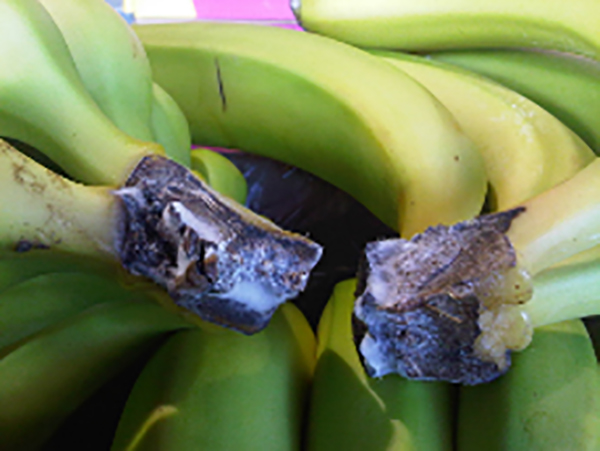
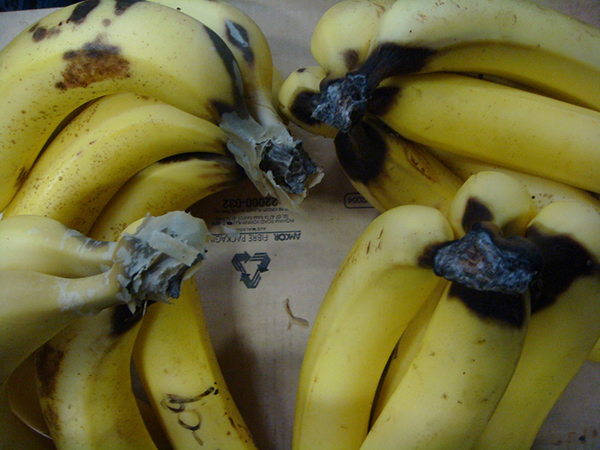
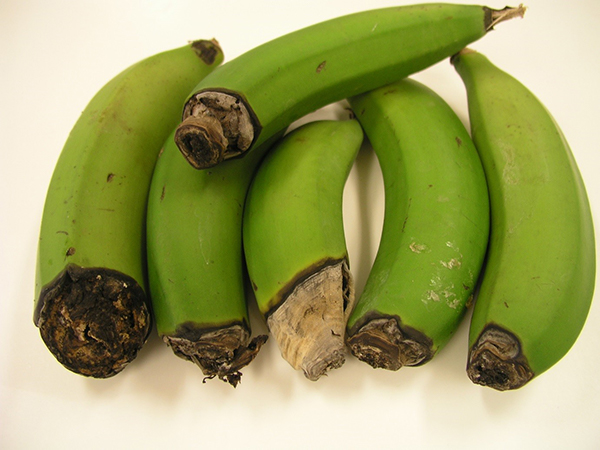
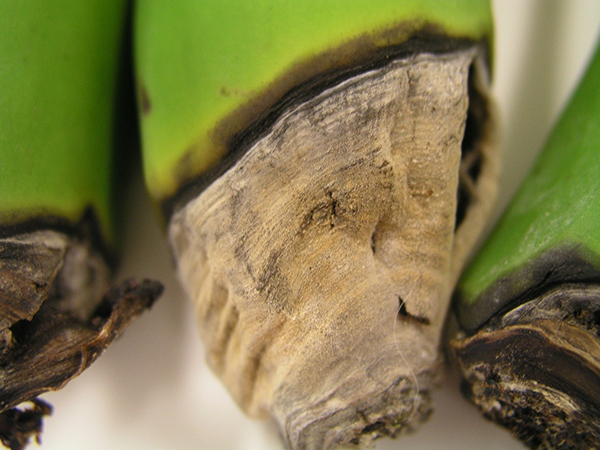
Crown end rot (CER) of bananas is a serious cause of post-harvest quality loss for banana fruit. As the name suggests, the rot begins at the cut surface of the crown, and depending on the severity, can extend down the neck of the fruit and into the fingers. There are several fungi that can cause CER symptoms and the visual appearance of those symptoms may indicate what fungal organism is responsible. However, multiple fungi can simultaneously cause symptoms, so it can be difficult to distinguish the difference with the naked eye.

The following fungi can cause crown end rot in bananas:

  • Fusarium equiseti-incarnatum species complex
  • Musicillium theobromae
  • Colletotrichum musae
  • Thielaviopsis musarum (commonly known as Chalara). 
Crown end rot extending into banana fruit.

More info...

Click here for more information and photos of the symptoms typically associated with each fungal organisms.

How do you manage crown end rot?

Currently, the most effective management strategy for CER is the application of post-harvest fungicides. Products containing thiabendazole (e.g. Tecto®) and prochloraz (e.g. Protak®) are registered for post-harvest use in bananas.

Recent research has indicated that some of the organisms that cause CER are less sensitive to thiabendazole based products, particularly in the coastal regions of Far North Queensland. These organisms remain more sensitive to products containing prochloraz.  Simulation studies have also shown that the longer banana fruit is held in the supply chain before ripening, the greater the risk of developing more severe symptoms of CER. Research has also investigated alternative post-harvest products. 

See below for more information on this research.

More info...

This work is funded as part of the Cause and management of crown rot of banana project (BA13011). This project is funded by Hort Innovation, using the banana research and development levy, co-investment from the Department of Agriculture and Fisheries and contributions from the Australian Government. Hort Innovation is the grower-owned, non-for-profit research and development corporation for Australian horticulture.

Tattered or holey leaves

Tattered or holey leaves

Greyback cane beetle

Inset: close-up of the feeding beetles © Department of Primary Industries

Cause: Feeding by adults of Dermolepida albohirtum. Damage is seldom severe, but extensive feeding on older leaves of bunched plants can lead to sunburnt fruit.

Solution: There are no recommended foliar chemical treatments as these will interfere with biological control and will result in serious mite infestation. This will be more damaging and costly than greyback cane beetle damage.

Swarming leaf beetles

Feeding on the young cigar leaf results in 'shot hole' type damage as the leaf unfurls. Inset: close-up of the feeding beetles © Department of Primary Industries

Cause: Leaf feeding of large numbers of adult Monolepta australis or Rhyparida spp. beetles. They swarm in spring and summer.

Solution: Damage is sporadic and no specific treatment is required.

Cluster caterpillar

© Department of Primary Industries
Cluster caterpillars and damage caused to leaf © Department of Primary Industries

Cause: Young larvae of Spodoptera litura feeding in groups on either the top or bottom of leaves, leaving the opposite side intact. Large larvae are solitary.

Solution: Damage is sporadic and most often concentrated on the tender leaves of plant crops. Fruit damage is usually restricted to a  few isolated bunches and seldom requires specific treatment. 

Banana skipper

Inset: close-up of rolled leaf © Department of Primary Industries

Biosecurity Alert

Cause: Larvae of Erionota thrax feed on the leaf blade and strip and roll it to form a shelter in which the larva develops. In heavy infestations, the entire leaf lamina is destroyed, leaving only the midrib.

Biosecurity: This leaf pest has not been found in Australia or Torres Strait Islands but is well established in Papua New Guinea. It is widely distributed throughout China, India, South East Asia, Mauritius and Hawaii. Report all suspicious outbreaks to Biosecurity Queensland immediately (13 25 23).

Grasshopper

© Department of Primary Industries

Cause: Feeding by grasshoppers Valanga spp. 

Solution: The damage is mostly cosmetic as plants will rapidly compensate for any leaf loss. It is usually only a problem on young plants, especially on new plant crops. No treatment is required.

Wind

© Department of Primary Industries

Cause: Strong winds tearing the leaf lamina. 

Solution: Retaining existing vegetation or planting specific windbreak trees can reduce the damage caused by strong winds.

Discoloured leaf petioles

Discoloured leaf petioles

Banana bunchy top

Note vein flecking in the leaf petiole caused by banana bunchy top virus © Department of Primary Industries

Biosecurity Alert

Cause: The banana bunchy top virus (BBTV) which is spread on infected planting material and by the banana aphid, Pentalonia nigronervosa. BBTV is not present in tropical Australia, and movement of planting material is controlled by legislation.

Solution: There is no cure for this disease and all infected plants must be eradicated.

Biosecurity: Under state legislation, banana bunchy top disease must be reported. If you have seen plants with banana bunchy top symptoms within the Southern Queensland banana biosecurity zone, or the NSW Banana Bunchy Top Virus Control Zone contact the Banana Bunchy Top Hotline on 1800 068 371.

If you have seen banana bunchy top outside of these areas, you must report it within 24 hours to the Biosecurity authority in your state (Biosecurity Queensland on 13 25 23, or NSW DPI Biosecurity Hotline 1800 680 244) or the Exotic Plant Pest Hotline on 1800 084 881.

More Info:

Better Bananas

Australian Banana Growers Council

Department of Primary Industries

NSW Department of Primary Industries and Regional Development

Plant Health Australia

Banana streak virus

Note vein flecking in the leaf petiole caused by banana streak virus © Department of Primary Industries

Cause: The banana streak virus (BSV).

Solution: Do not take planting material from infected plants. Eradicate infected plants where symptoms are observed.

Nitrogen deficiency

Pink discolouration of the petioles first appears on the older leaves but all leaves quickly become affected © Department of Primary Industries

Cause: Insufficient nitrogen available for the plant due to inadequate fertiliser applications or leaching and gaseous loss of the nitrogen fertiliser applied.

Solution: Appropriate application of nitrogen fertiliser. You need to know your soil type, climate, past fertiliser program, and soil and leaf analysis results when determining the fertiliser rate.