News

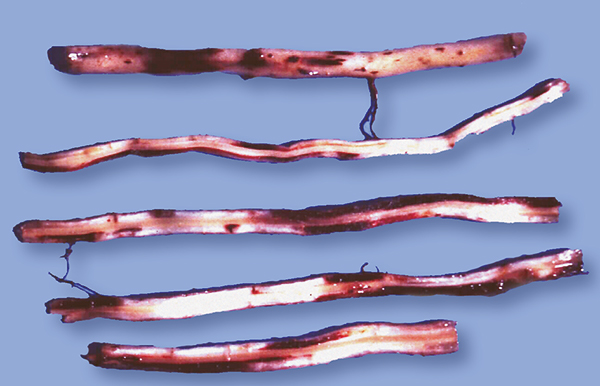
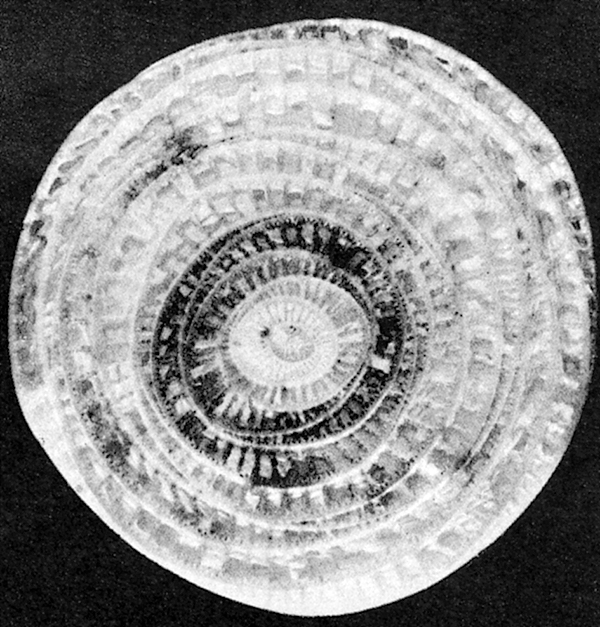
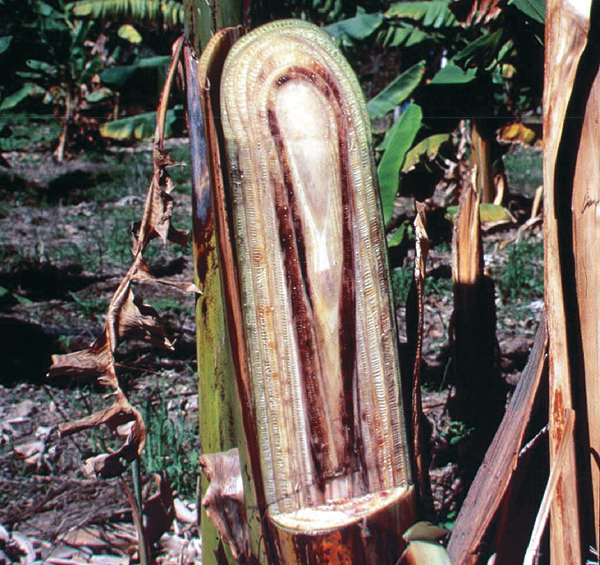
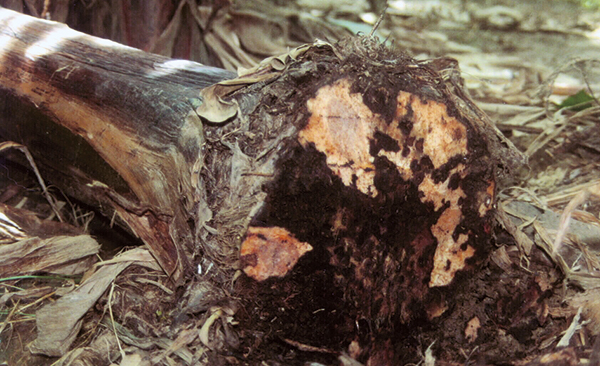
Internal stem discolouration

Internal stem discolouration

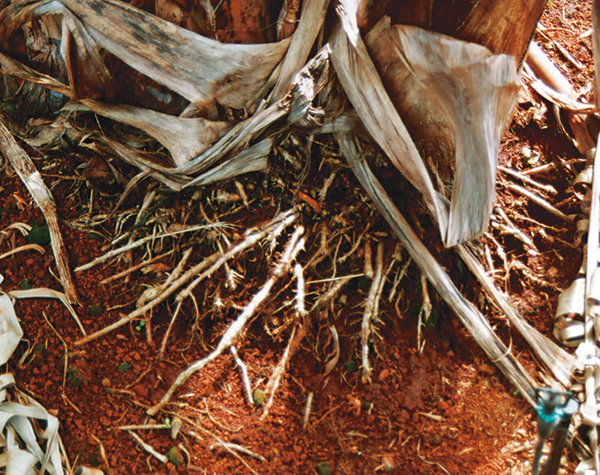
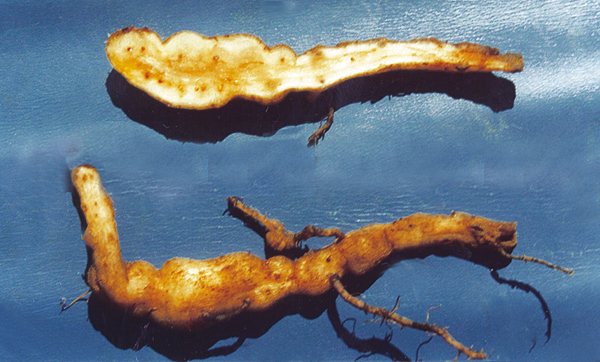
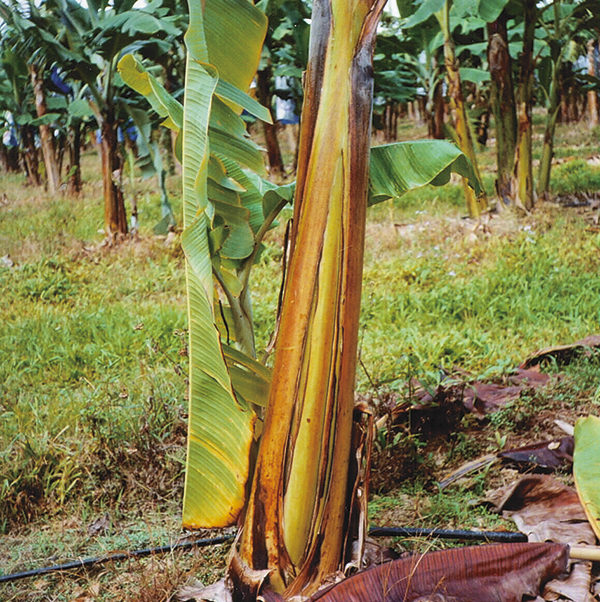
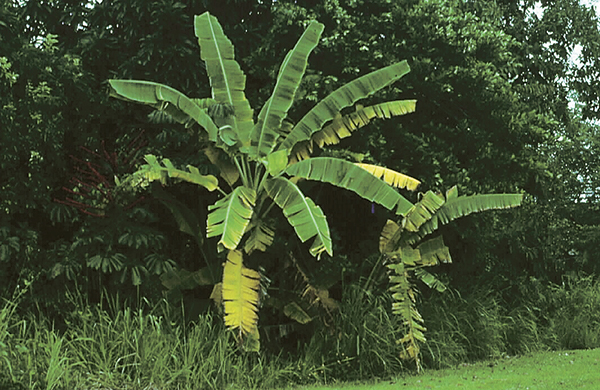
Moko disease

© Department of Primary Industries

Biosecurity Alert

Cause: The bacteria Ralstonia solancearum race 2. Moko is a soil-borne disease and is spread with soil, in water, on implements, in planting material and by insects from flower to flower. The infection enters the plant through the roots and spreads through the host, blocking conducting tissue and resulting in plant yellowing, wilting and death.

Solution: There is no chemical control for Moko. All plants plus an adequate buffer zone around the diseased plants must be destroyed. The area must be quarantined and only non-host plants grown.

Biosecurity obligation: If you suspect Moko disease you must notify Biosecurity Queensland immediately (13 25 23)

More info:

Plant Health Australia

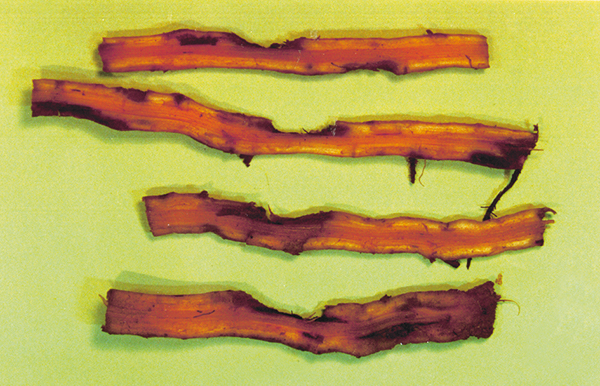
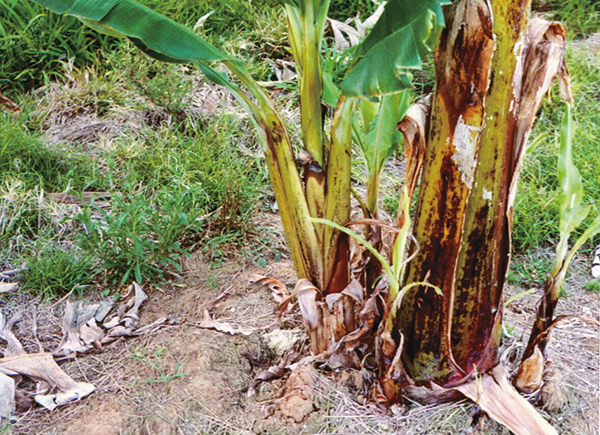
Panama disease (Fusarium wilt)

Internal discolouration of the pseudostem © Department of Primary Industries

Biosecurity Alert

Cause: The fungus Fusarium oxysporum f. sp. cubense which is a soil-borne organism. It is spread in water, soil and planting material. It enters the plant through the roots, and blocks the conducting tissue within the plant resulting in wilting, yellowing of leaves, splitting of the pseudostem and death of the plant.

Solution: There is no cure for affected plants. Use only approved planting material and do not plant in previously infested areas.

Biosecurity obligation: Panama is a notifiable disease and you must report any suspicious plants. If you suspect Panama disease you must notify Biosecurity Queensland immediately (13 25 23)

More info:

Queensland Department of Primary Industries

ABGC Grower Support Biosecurity (Grower kit)

Plant Health Australia

More images

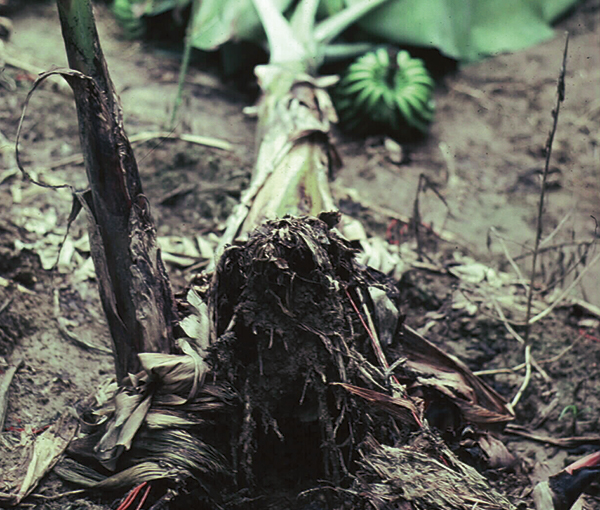
Stem shatters

Stem shatters

2,4-D damage

Photo shows extreme symptoms © Department of Primary Industries

Cause: Injection of 2,4-D will kill the plant. Overspray or drift from herbicide application may cause lesser symptoms.  

Solution: Be extremely careful with chemical applications.

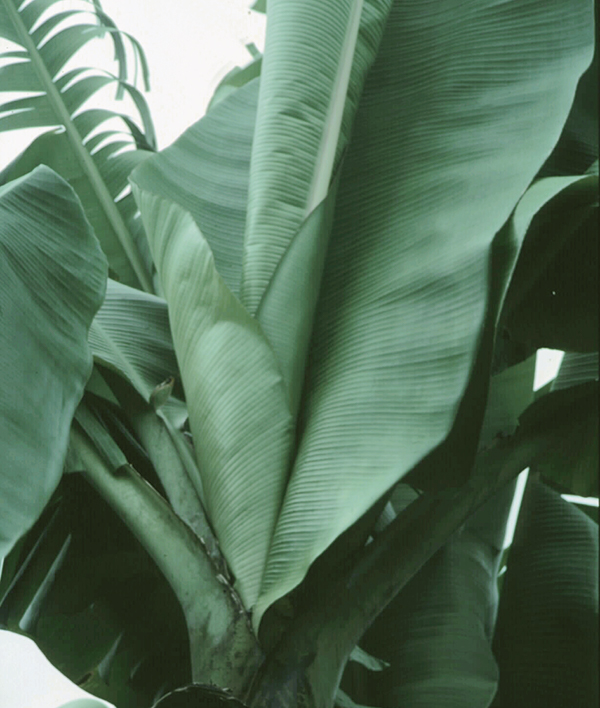
Banana streak virus

© Department of Primary Industries

Cause: The banana streak virus (BSV). Symptom expression is sporadic. Symptoms of cucumber mosaic are similar. 

Solution: Do not take planting material from infected plants. Eradicate infected plants where symptoms are observed. Confirm diagnosis by looking for yellow black streaks or flashes on leaves or by laboratory tests. 

Frost

© Department of Primary Industries

Cause: Frost during the growing season.

Solution: No cure for damaged plants. Slightly damaged plants may grow out of it.

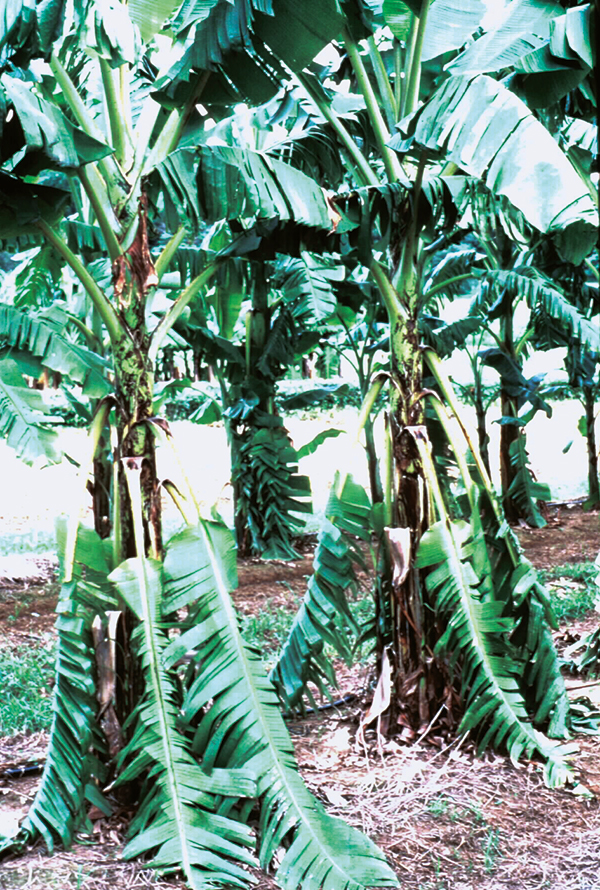
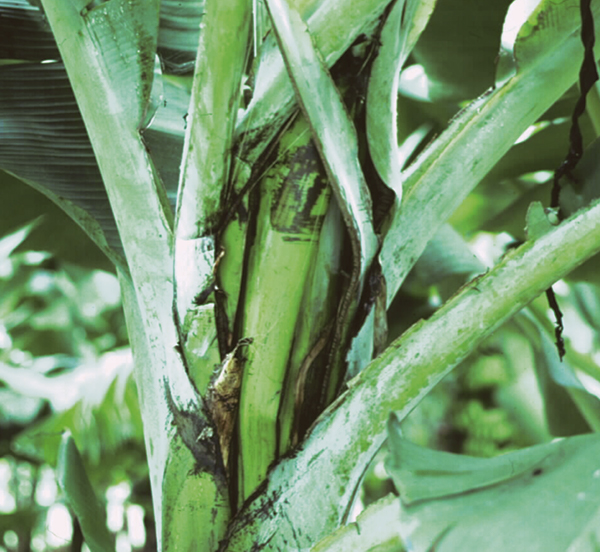
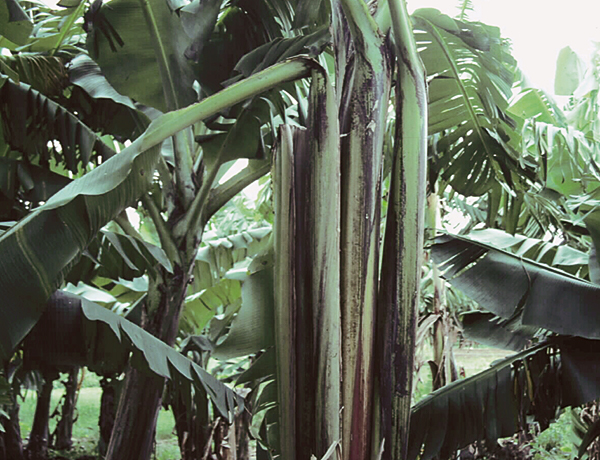
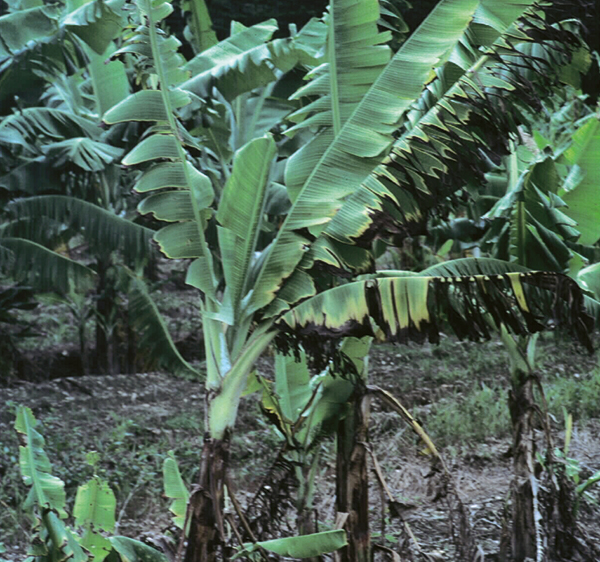
Panama disease (Fusarium wilt)

Image showing splitting of the pseudostem © Department of Primary Industries

Biosecurity Alert

Cause: The fungus Fusarium oxysporum f. sp. cubense which is a soil-borne organism. It is spread in water, soil and planting material. It enters the plant through the roots, and blocks the conducting tissue within the plant resulting in wilting, yellowing of leaves and death of the plant.

Solution: There is no cure for affected plants. Use only approved planting material and do not plant in previously infested areas.

Biosecurity obligation: Panama is a notifiable disease and you must report any suspicious plants. If you suspect Panama disease you must notify Biosecurity Queensland immediately (13 25 23).

More info:

Queensland Department of Primary Industries

ABGC Grower Support Biosecurity (Grower kit)

Plant Health Australia

More images

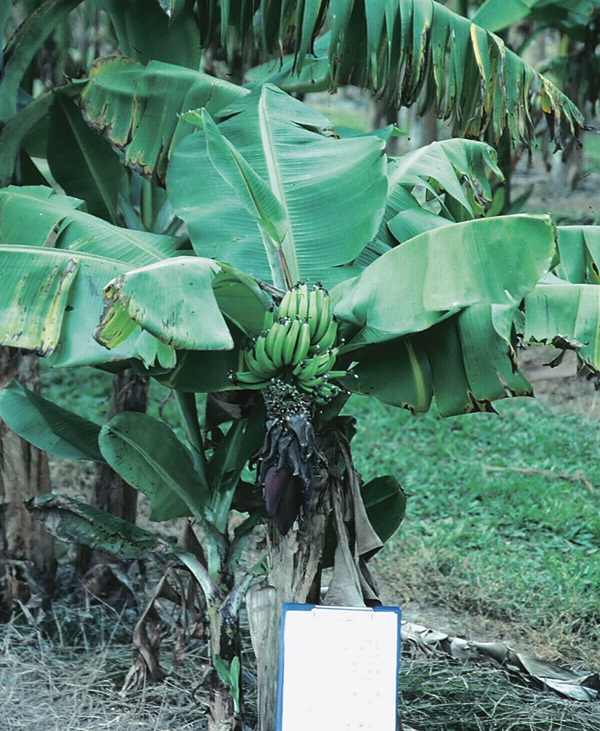
Tissue-cultured off-type

© Department of Primary Industries

Cause: A genetic abnormality that occurs in tissue-cultured plants. 

Solution: Remove affected plants and set additional following suckers on nearby plants.

Small and stunted plants

Small and stunted plants

Banana bunchy top

Advanced symptoms of BBTV © Department of Primary Industries

Biosecurity Alert

Cause: The banana bunchy top virus (BBTV) which is spread on infected planting material and by the banana aphid, Pentalonia nigronervosa. BBTV is not present in tropical Australia, and movement of planting material is controlled by legislation.

Solution: There is no cure for this disease and all infected plants must be eradicated.

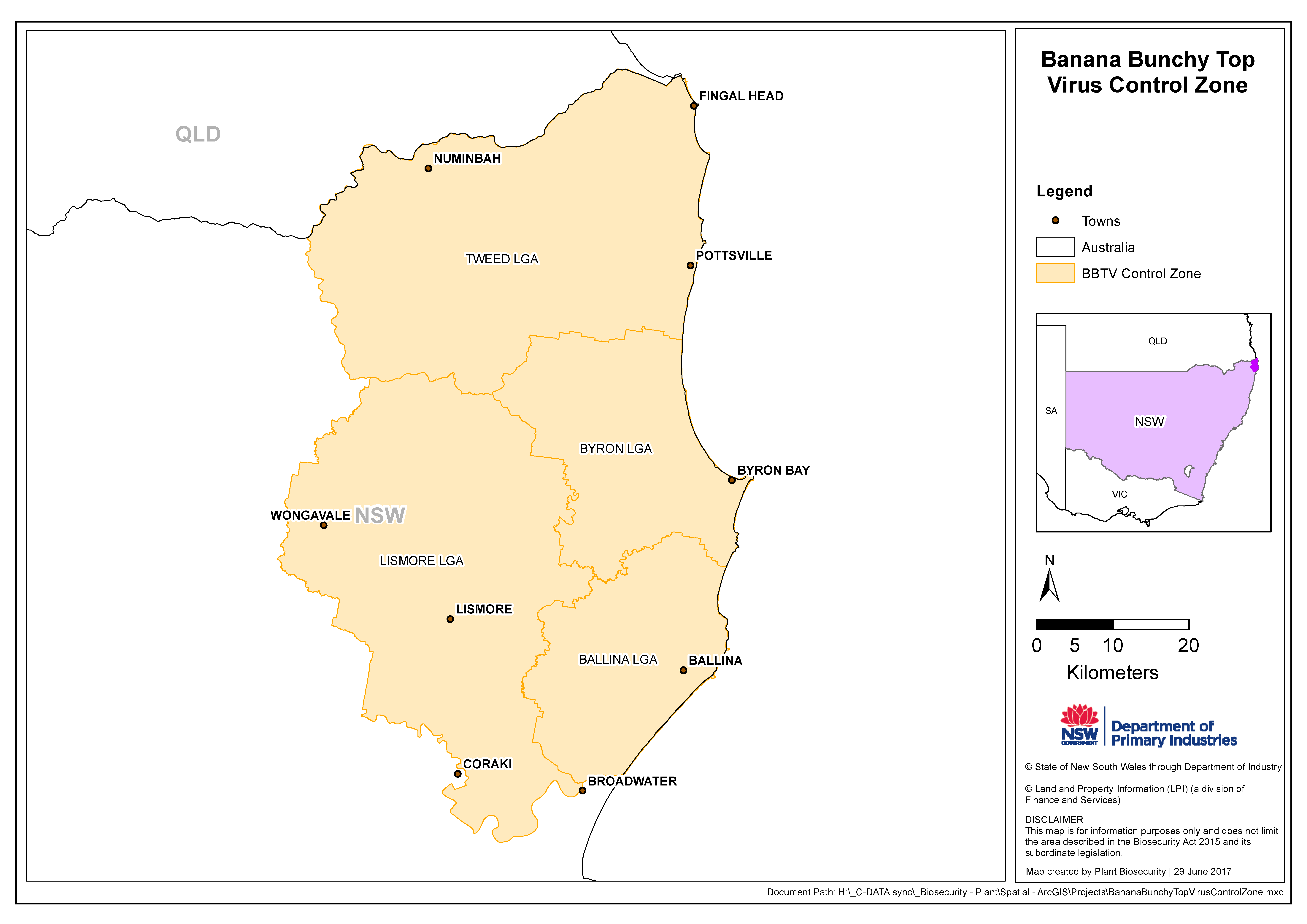
Biosecurity: Under state legislation, banana bunchy top disease must be reported. If you have seen plants with banana bunchy top symptoms within the Southern Queensland banana biosecurity zone, or the NSW Banana Bunchy Top Virus Control Zone contact the Banana Bunchy Top Hotline on 1800 068 371.

If you have seen banana bunchy top outside of these areas, you must report it within 24 hours to the Biosecurity authority in your state (Biosecurity Queensland on 13 25 23, or NSW DPI Biosecurity Hotline 1800 680 244) or the Exotic Plant Pest Hotline on 1800 084 881.

More Info:

Better Bananas

Australian Banana Growers Council

Department of Primary Industries

NSW Department of Primary Industries and Regional Development

Plant Health Australia

Banana weevil borer

© Department of Primary Industries

Cause: Tunnelling by larvae of Cosmopolites sordidus in the corm. Sever infestation reduces plant vigour. 

Solution: Use stem baits (traps) to establish the severity of the infestation. If numbers exceed an average of 4 weevils per trap, treat with appropriate insecticide. Pheromone traps are also available.

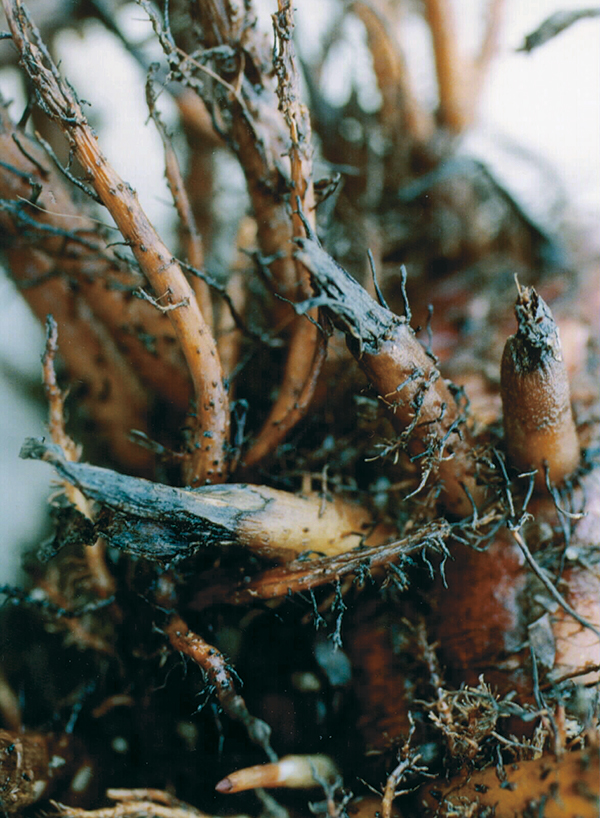
Burrowing nematode

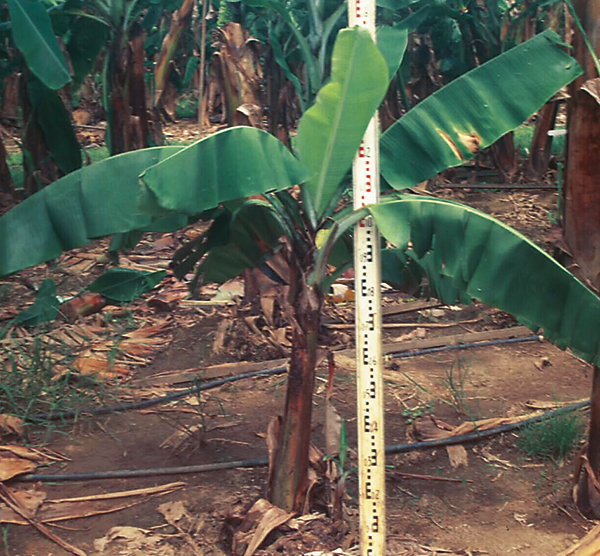
There are several causes of small and stunted plants but two important ones are burrowing nematode and banana weevil borer © Department of Primary Industries

Cause: Severe root damage caused by burrowing nematode affects the plant’s ability to take up water and nutrients from the soil.

Solution: Check a random sample of roots from the whole field to determine if nematodes are the problem and if a nematicide treatment is necessary.  

Not enough water/dry conditions

© Department of Primary Industries

Cause: Insufficient water for plant growth.

Solution: Use water scheduling techniques to supply sufficient water to meet the plant’s requirements.

Tissue-cultured off-type

© Department of Primary Industries

Cause: A genetic abnormality occurring in tissue-cultured plants.

Solution: Remove affected plants and set additional following suckers on nearby plants.

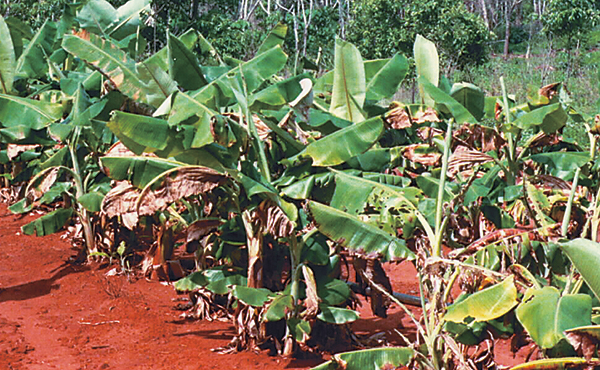
Plants turn yellow and die

Plants turn yellow and die

Bacterial corm rot

© Department of Primary Industries

Cause: The bacteria Pectobacterium spp. (formerly known as Erwinia spp.) that are common soil inhabitants. Plants that are stressed during the dry season can succumb to invasion during the wet season. 

Solution: No chemical treatments are available. Ensure adequate moisture levels are maintained during the dry season and provide good drainage during prolonged wet seasons. 

Herbicide damage (glyphosate)

© Department of Primary Industries

Cause: Glyphosate spray drift onto green parts of the plant. The first symptom is yellowing of leaves.

Solution: No cure for damaged plants. Be extremely careful when using glyphosate. 

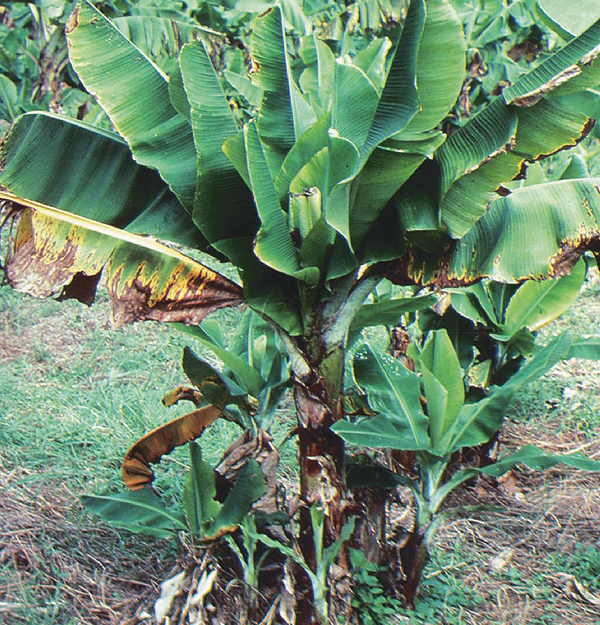
Panama disease (Fusarium wilt)

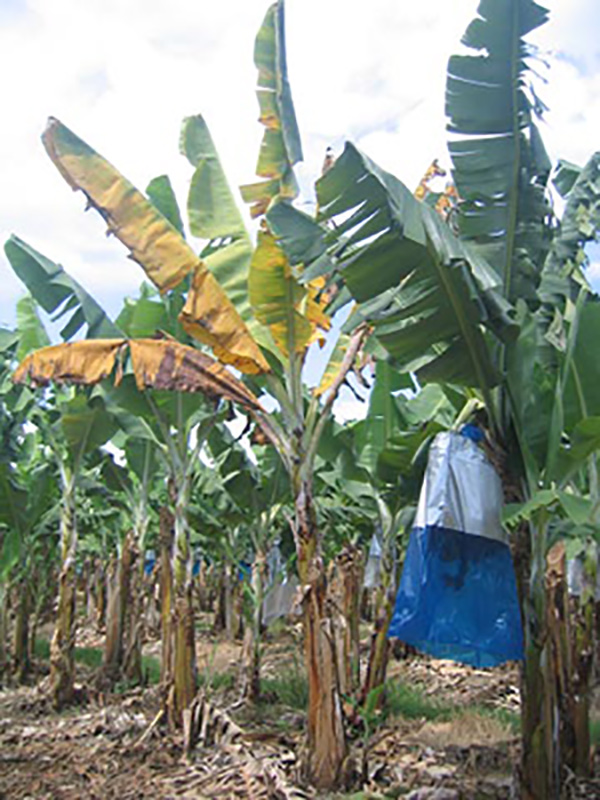
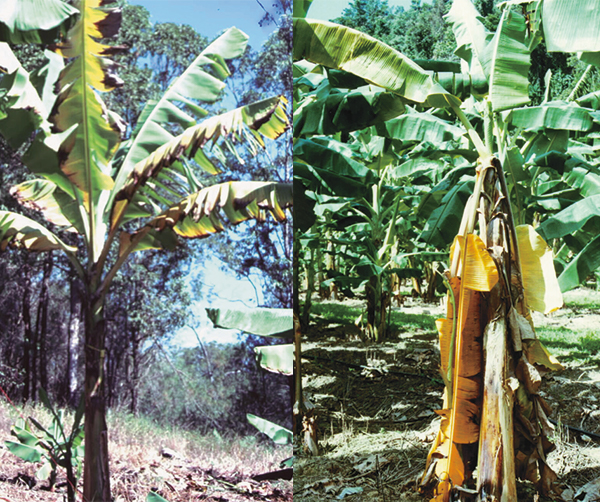
Left: early stage showing the yellowing of leaves. Right: late stage after the leaves have dropped © Department of Primary Industries

Biosecurity Alert

Cause: The fungus Fusarium oxysporum f. sp. cubense which is a soil—borne organism. It is spread in water, soil and planting material. The fungus enters the plant through the roots and blocks the conducting tissue within the plant, resulting in wilting, yellowing of leaves, splitting of pseudostem and death of the plant. There are several “races” of the disease which affect different varieties.

Solution: There is no cure for affected plants. Use only approved planting material and do not plant in previously infested areas.

Biosecurity obligation: Panama is a notifiable disease and you must report any suspicious plants. If you suspect Panama disease you must notify Biosecurity Queensland immediately (13 25 23).

More info:

Queensland Department of Primary Industries

ABGC Grower Support Biosecurity (Grower kit)

Plant Health Australia

More images 

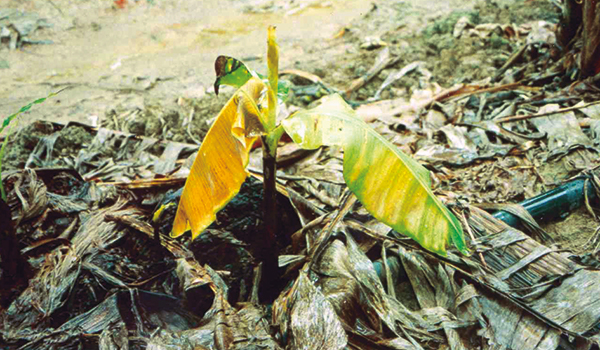
Water-logging

Water-logging after planting can also cause small and stunted plants © Department of Primary Industries

Cause: Not enough oxygen for the roots caused by too much water in the soil from rainfall or irrigation. 

Solution: Avoid planting in areas that are often water-logged and in heavy soils. Install and maintain the drainage system for your plantation. 

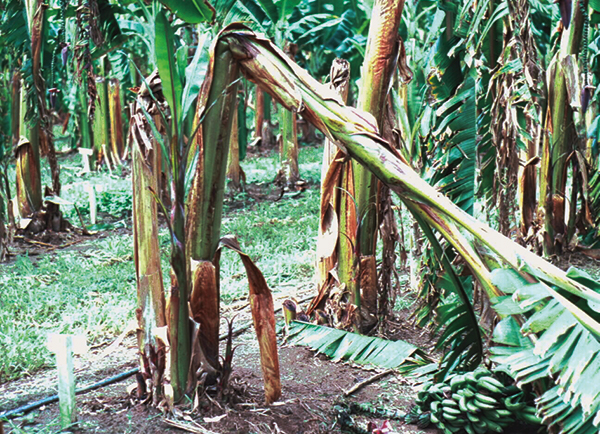
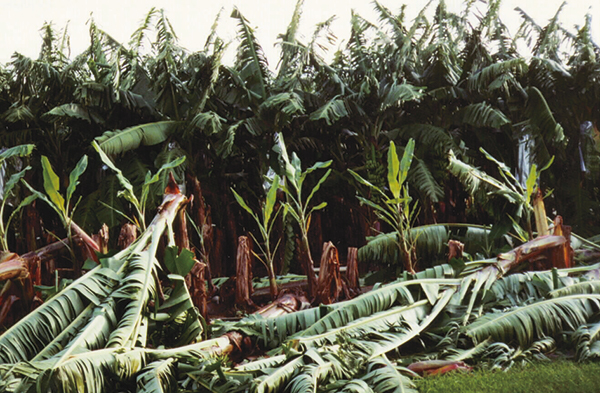
Plants kink, bend or fall over

Plants kink, bend or fall over

Banana weevil borer (plants fall over)

© Department of Primary Industries

Cause: Tunnelling by larvae of Cosmopolites sordidus in the corm. Sever infestation reduces plant vigour. 

Solution: Use stem baits (traps) to establish the severity of the infestation. If numbers exceed an average of four weevils per trap, treat with appropriate insecticide. Pheromone traps are also available.

More info:

Banana weevil borer – general information

Borrowing nematode (plants fall over)

© Department of Primary Industries

Cause: Burrowing nematode feeding on roots weakens the plant’s root system.

Solution: Check roots over the whole field to determine if nematodes are the problem and if a nematicide treatment is necessary. Propping or tying string between plants may prevent some losses.


Heat stress/lack of water (plants bend or kink)

© Department of Primary Industries

Cause: Extreme heat and or dry conditions.

Solution: Use water scheduling techniques to supply sufficient water to meet the plants’ requirements.


Poor tying (plants bend or kink)

Note the trees in the background have been tied or propped © Department of Primary Industries

Cause: Incorrect bunch and tree support.

Solution: Ensure tying or propping is done correctly.


Fruit rotting after harvest

Fruit rotting after harvest

Anthracnose

© Department of Primary Industries

Cause: The fungus Colletotrichum musae. Spores are produced on dead banana material and are spread to young fruit in water droplets. The fungus remains dormant in the tissue until the onset of ripening.

Solution: Handle harvested banana fruit with care to avoid damage. Apply appropriate post-harvest fungicide treatment.

Crown rot

Fungal growth seen on the cut surface of the crown © Department of Primary Industries
Rot extending beyond crown and into fruit © Department of Primary Industries

Cause: Several organisms can be responsible for causing crown rot symptoms. These include Musicillium theobromae, Fusarium equiseti-incarnatum (species complex), Colletotrichum musae and Thielaviopsis musarum. Symptoms can vary from fungal growth ‘fluff’ present on the cut crown surface through to complete breakdown of fruit.

Solution: Application of appropriate post-harvest fungicides will assist in minimising symptoms in the supply chain.

More info:

Crown end rot research 

Fruit rotting in field

Fruit rotting in field

Cigar end

Affected areas are dark and in later stages are covered by ashy grey spores © Department of Primary Industries
Close up of later stage covered by ashy grey spores © Department of Primary Industries

Cause: The fungus Musicillium theobromae (formerly known as Verticillium theobromae). It enters the fruit from the dead floral parts and extends 10 to 20 mm into the fruit. 

Solution: Cigar end is a minor disease and specific control measures are not warranted. 

Mixed ripe

Bunch ripens prematurely in the field, making the bunch unmarketable © Department of Primary Industries

Cause: Various stresses (severe leaf spot, pest damage, water and nutrition) reduce the rate of fruit filling. 

Solution: Improve crop management to limit stresses on the plant.

Sunburn

© Department of Primary Industries

Cause: Insufficient bunch shading during prolonged high temperatures. 

Solution: There is no cure for affected fruit. Maintain good canopy cover and ensure bunch covers are applied properly. It may be necessary to pull a leaf down over the bunch for protection. 

Punctures or splits on fruit

Punctures or splits on fruit

Bell injection

© Department of Primary Industries

Cause: Incorrect bell injection technique.

Solution: Train staff to inject slightly above one-third from the top of the bell. 

Birds or bats

© Department of Primary Industries

Cause: Birds and bats landing on the bunch to feed on nectar from immature flowers.

Solution: Cover bunches promptly and use thick covers. For Lady Finger apply covers before any bracts lift on the bunch. 

Diamond spot

Symptoms show as slightly raised yellow spots on small fruit or longitudinal cracks on growing fruit. The exposed tissue collapses and turns black © Department of Primary Industries

Cause: The fungus Cercospora hayi. Spores are produced on dead banana material. 

Solution: Diamond spot is a minor disease especially where control of leaf spot is effective. 

Best management practices

Two complementary guidelines for best management practices (BMP) are now available to the Australian banana industry. These BMPs provide national guidelines to encourage continuous improvement and adoption of best practice in the banana industry. Both BMPs consist of a self-assessment checklist and corresponding information resources. 

Best management practices: Environmental guidelines

This guide reflects the structure of the Freshcare Environmental code of practice, while providing specific banana industry content and best practice. The voluntary guideline provides a single point of reference for information relevant to environmental practices. Some of the practices have benefits that go beyond environmental interests and are practices that could potentially improve productivity and profitability.

The online system for this BMP allows you to electronically select the environmental practices that you have in place which will then:

  • automatically generate a management plan (which can be used for some environmental auditing systems). 
  • allow you to action this management plan (e.g. assign budget and responsibilities to improve practices).
  • allow you to anonymously compare your practices to moving industry benchmarks.

Login or download...

Did you know...

The banana industry’s ‘Better Bunch’  app is a time-saving device to assist growers to record their everyday farm practices to complement their BMP. If you complete your BMP on-line, you are currently able to access the app for free. 

Best management practices: On-farm biosecurity

The Australian banana industry is vulnerable to pests and diseases. This best management practice (BMP) guideline can help growers implement effective on-farm biosecurity practices. It was developed following the detection of Panama disease tropical race 4 in Far North Queensland in 2015. It includes examples of on-farm biosecurity practices that are not only relevant to Panama disease but also minimises the risk of introducing other new pests, diseases and weeds onto your property. 

The online system for this BMP allows you to electronically select the biosecurity practices that you have in place which will then:

  • automatically generate a management plan
  • allow you to action this management plan (e.g. assign budget and responsibilities to improve practices).
  • allow you to anonymously compare your practices to moving industry benchmarks.

Login or download…

For more information on these BMP guidelines contact the better bananas team – betterbananas@daf.qld.gov.au or 13 25 23. 
BMP: Environmental guidelines – The project was funded as part of Reefocus Extension, a Queensland Government Reef Plan initiative, working with growers to increase farm productivity and profitability and improve water quality in the Great Barrier Reef. This project was funded as part of the Developing a best management practices guideline for the Australian banana industry project (BA11006). This project was funded by Hort Innovation using the banana research and development levy, co-investment from the Queensland Department of Agriculture and Fisheries and contributions from the Australian Government. 
BMP: On-farm biosecurity –This resource was developed as part of the Fusarium Wilt Tropical Race 4 – Biosecurity and Sustainable Solutions project (BA14013). This project was funded by Hort Innovation, using the banana research and development levy, with co-investment from the Queensland Department of Agriculture and Fisheries and funds from the Australian Government.
Hort Innovation is the grower-owned, not-for-profit research and development corporation for Australian horticulture.

Rust or bronzing on fruit

Rust or bronzing on fruit

Banana rust thrips

Left: early damage appears as a water-soaked area on the skin between touching fingers. Right: later development showing typical reddish-brown rust © Department of Primary Industries

Cause: Feeding by Chaetanaphothrips signipennis from bract fall to harvest causes a rust brown skin discoloration. This symptom should not be mistaken for maturity bronzing, which is more prevalent on the outer exposed areas of the fingers.

Solution: Soil treatments for banana weevil borer will help control the soil thrips population. Treat bunches at the time of bunch covering.

More info:

Banana rust thrips — general information and monitoring and control options
More images

Maturity bronzing

The bronze-red blemish on the curved fruit surface first appears at the 'three-quarter full' stage and becomes more intense and extensive as the bunch fills © Department of Primary Industries

Cause: Oxidation of cell contents, possibly from a water and nutritional imbalance, causes the epidermal cells to discolour, lift and break. 

Solution: In the short term, bunches should be harvested early before symptoms become more severe. Avoid water and nutrient stresses in the plant.

More info:

Maturity bronzing—stretching the limits on fruit quality

Spray burn

Symptoms are similar to maturity bronzing but are associated with chemical burn from injection for scab moth. Symptoms are commonly seen on lower hands and may cross to fruit ridges © Department of Primary Industries

Cause: Incorrect chemical application rates, problems with compatibility or environmental conditions.

Solution: Check that you are using registered chemicals and are applying them at the correct rates. Make sure that your spray application equipment is cleaned regularly. 

Silvering thrips

Note irregular silvery patches speckled with black spots. In severe cases the skin splits, causing longitudinal cracks © Department of Primary Industries

Cause: Feeding by Hercinothrips bicinctus.

Solution: This is a minor and rare pest of bananas grown in north Queensland. No specific treatments are required.

Mites

© Department of Primary Industries
Upper: banana (strawberry) spider mite causes red to purple-black surface discolouration to cushion end. Lower: two-spotted mite damage; webbing is usually present © Department of Primary Industries

Cause: Banana (strawberry) spider mite, Tetranychus lambi, feeding on the fingers. More severe infestation will result in the damage spreading over the entire fingers. 
Two-spotted mites, Tetranychus urticae, feed primarily on the tips of fingers, causing silver-grey superficial damage. Webbing forms ‘bridges’ between heavily infested fingers. 

Solution: Severe mite outbreaks are usually the result of poor insecticide management, especially foliar application of disruptive pesticides that destroy beneficial species such as the Stethorus spp. beetle. Treatments with a suitable miticide may be required during periods of hot, dry weather when mite build-up can be rapid.

More info: