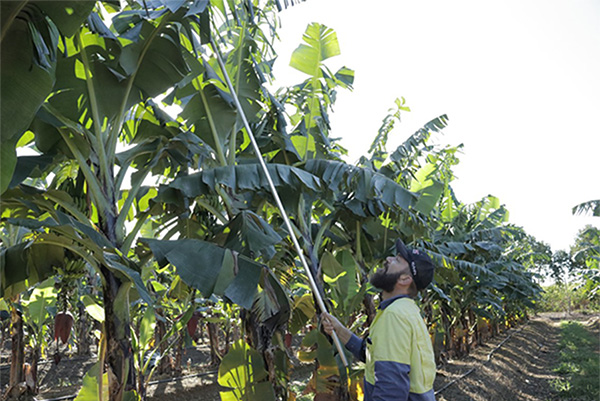



As temperatures rise and conditions become more favourable for disease development, now is an ideal time to assess your yellow Sigatoka management program. The winter and spring period provides a valuable opportunity to remove infected leaf material and improve canopy health before the onset of the wet season.
Recent seasons have presented plenty of challenges for banana growers across Queensland’s wet tropics. Persistent rainfall and high humidity have created ideal conditions for disease pressure, making proactive management more important than ever.
To support growers, DPI’s Banana Extension Team has collaborated with plant pathologist David East to develop a range of yellow Sigatoka resources that highlight practical management strategies and best-practice recommendations.
David’s key recommendations include:
Make deleafing a routine part of your farm management program. Removing infected leaves is essential, as fungicide applications alone will not provide effective control.
Apply fungicides correctly and always follow label directions.
Remove diseased leaf material before applying systemic fungicides to maximise effectiveness and help reduce the risk of fungicide resistance.
Take advantage of the cooler, drier winter-spring period to clean up blocks before disease pressure increases during the wet season.
Good block hygiene and sound crop management can also play an important role in lowering disease pressure and supporting an effective yellow Sigatoka control program.